
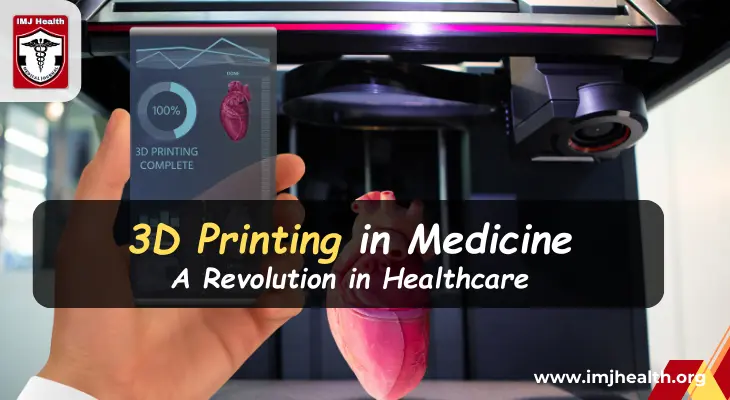
Technology has transformed healthcare in many ways, and one of the most exciting advancements is 3D printing in medicine. This innovation allows doctors, researchers, and medical engineers to create customized medical solutions, including prosthetics, implants, and even human tissue.
What is 3D Printing in Medicine?
3D printing is a process where objects are built layer by layer using digital models. In medicine, this technology is used to create patient-specific solutions, improving treatment effectiveness and patient comfort. The materials used for medical 3D printing include plastics, metals, ceramics, and even biological materials.
Uses of 3D Printing in Healthcare:
1. Prosthetics and Implants:
One of the most common uses of 3D printing in medicine is creating prosthetic limbs and implants. Unlike traditional methods, 3D printing allows for personalized prosthetics that fit patients perfectly. This is especially helpful for children, as they require frequent adjustments due to growth.
2. Surgical Models for Better Planning:
Surgeons can now print 3D models of organs, bones, and tumors to plan complex procedures in advance. These models help doctors practice surgeries before performing them on patients, reducing risks and improving success rates.
3. Custom-Made Medical Devices:
From hearing aids to dental implants, 3D printing is used to manufacture personalized medical devices. This ensures better comfort, function, and long-term results for patients.
4. Bioprinting – Printing Human Tissue:
One of the most futuristic uses of 3D printing in medicine is bioprinting, where living cells are used to print tissues and even organs. Scientists are working on printing skin grafts for burn victims, heart valves, and even functional human organs, which could one day solve the problem of organ shortages.
5. Drug Development and Personalized Medicine:
3D printing is also used in pharmaceutical research to create personalized medicines. This means patients could receive drugs tailored to their specific needs, improving treatment effectiveness and reducing side effects.
Benefits of 3D Printing in Medicine:
- Customization: Medical solutions can be designed specifically for each patient.
- Cost-Effective: 3D printing reduces production costs compared to traditional methods.
- Faster Production: Medical implants and prosthetics can be created in a much shorter time.
- Improved Patient Outcomes: Personalized treatment leads to better results and recovery.
Challenges and Future of 3D Printing in Medicine:
While 3D printing in medicine has many advantages, there are still challenges. Regulatory approvals, high initial costs, and ethical concerns related to bioprinting need to be addressed. However, as technology advances, 3D printing is expected to become a routine part of healthcare, transforming the way treatments are provided.
How IMJ Health Can Help in 3D Printing Research in Healthcare:
At IMJ Health, we recognize the growing importance of 3D printing in the medical and pharmaceutical fields. We provide a trusted platform for researchers, scientists, and medical professionals to publish their work in 3D printing applications for healthcare.
Why Publish 3D Printing Research in IMJ Health?
- Global Recognition: IMJ Health is indexed in major scientific databases, ensuring wide visibility for your research.
- Open Access: We follow an open-access model, making your research accessible to the global medical community.
- Peer-Reviewed Publication: Our rigorous peer-review process ensures high-quality and impactful research contributions.
- Multidisciplinary Platform: We welcome research from various fields, including bioprinting, prosthetics, medical devices, and pharmaceutical applications of 3D printing.
If you are conducting research in 3D printing for healthcare, consider publishing your findings in IMJ Health to reach a global audience of medical and healthcare professionals.

3D printing is revolutionizing medicine by providing customized, affordable, and effective solutions for patients. From prosthetics to organ printing, this technology is shaping the future of healthcare. As research progresses, we can expect even greater breakthroughs, making treatments more personalized and accessible.
At IMJ Health, we are committed to supporting cutting-edge research in 3D printing and healthcare. Submit your research today and contribute to the future of medical innovation!