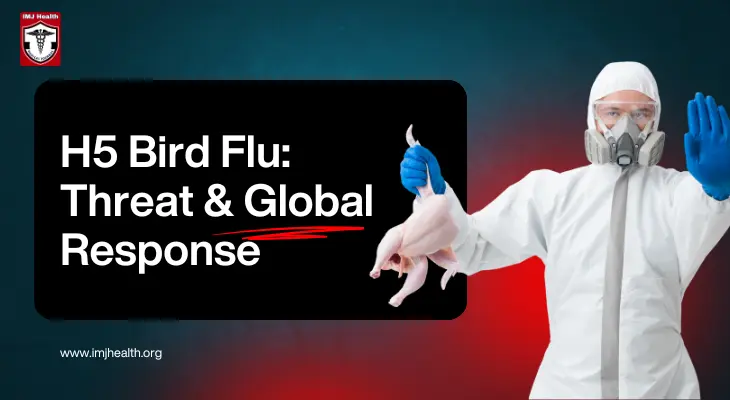
The H5 subtype of avian influenza virus—commonly referred to as H5 bird flu—is a highly pathogenic strain that primarily affects birds but can occasionally infect humans and other animals. Since its emergence, particularly the H5N1 variant, it has caused significant concerns due to its potential to cause severe disease and even death in humans, as well as economic losses in the poultry industry. As the world recovers from the COVID-19 pandemic, the rise of sporadic H5 outbreaks has renewed global focus on zoonotic diseases with pandemic potential.
What is H5 Bird Flu?
H5 bird flu refers to avian influenza viruses that have the H5 hemagglutinin (HA) surface protein. The most notorious of these is H5N1, first identified in geese in China in 1996 and later associated with human infections and high mortality rates.
Key Characteristics:
- Highly Pathogenic Avian Influenza (HPAI): Some H5 strains are classified as HPAI due to their severe impact on poultry.
- Zoonotic Potential: Though not easily transmissible between humans, H5N1 can infect people who have close contact with infected birds.
- Global Spread: Detected in over 80 countries, with recurring outbreaks in Asia, Africa, Europe, and North America.
Transmission: From Birds to Humans
The primary reservoir for H5 viruses is wild aquatic birds. Transmission to domestic poultry and occasionally to humans occurs via:
- Direct contact with infected birds or surfaces contaminated with their secretions.
- Handling raw poultry meat or droppings.
- Visiting live bird markets.
Human-to-human transmission is extremely rare, but a few isolated cases have been reported under close contact conditions.
Symptoms in Humans
Infected humans may experience:
- High fever and cough
- Sore throat and muscle aches
- Shortness of breath
- Severe pneumonia or Acute Respiratory Distress Syndrome (ARDS)
- Gastrointestinal symptoms (in some cases)
Mortality Rate: H5N1 has a reported case fatality rate of about 50%, making it one of the deadliest flu viruses known, although rare.
Current Global Outbreaks and Concerns (as of 2025)
Recent years have seen:
- Outbreaks of H5N1 in Europe and the U.S., causing large-scale culling of poultry.
- H5N8 and H5N6 variants infecting humans in China and parts of Southeast Asia.
- Rare transmission events to mammals like mink, foxes, and even domestic pets, raising concerns about viral mutation.
These events highlight the virus’s potential to adapt and cross species barriers, which could increase pandemic risk.
Vaccine and Treatment Status
Vaccines:
- Human vaccines for H5N1 exist in some national stockpiles, but are not widely distributed.
- New platforms like mRNA-based vaccines are being explored for faster responses in case of outbreaks.
Antivirals:
- Oseltamivir (Tamiflu) and zanamivir may be effective if administered early.
- Resistance has been reported in some strains, necessitating continuous monitoring.
Global Surveillance and Preparedness
Organizations like the World Health Organization (WHO), FAO, and CDC are:
- Monitoring outbreaks through global One Health strategies.
- Encouraging countries to improve biosecurity in poultry farms.
- Supporting research into rapid diagnostics, vaccines, and antiviral stockpiling.

Scientific Research Directions
- Genome Sequencing: Tracking mutations to identify potential human-adapted strains.
- Animal Model Studies: Understanding how the virus affects different species.
- Cross-protection studies: Determining whether current flu vaccines provide any partial protection.
- AI-based surveillance: Using machine learning to detect outbreak signals early.
What Can the Public Do?
- Avoid contact with wild birds or poultry in outbreak zones.
- Do not handle dead birds without protective gear.
- Cook poultry and eggs thoroughly.
- Follow travel advisories and health alerts from local authorities.
H5 bird flu is a stark reminder of the constant threat posed by zoonotic diseases. While it has not yet triggered a global pandemic, its high mortality rate, adaptability, and increasing reach among mammals call for vigilant monitoring, sustained research, and global collaboration. Advances in vaccine technology and surveillance systems offer hope—but preparation remains key.
Trusted Sources for H5 Bird Flu Information for Research:
- The World Health Organization (WHO) reports that as of July 2025, there have been 986 human cases of H5N1 worldwide from 25 countries, with 473 deaths (case fatality rate ~48%)—most linked to direct exposure to infected birds or environments.
- The Pan American Health Organization/WHO regional alert confirms multiple human H5N1 cases in the Americas, including recent incidents in California, Nevada, Louisiana, and Mexico, mostly linked to poultry exposure; human-to-human spread remains unconfirmed.
- According to the CDC, as of July 7, 2025, there are no signs of unusual influenza activity in humans, and bird flu surveillance has been integrated into routine flu reporting. Outbreaks in poultry and dairy cattle are ongoing in the U.S.
- The CDC’s March 2025 update confirms the global human mortality rate from H5N1 is approximately 50%, though in U.S. cases, only 1 death occurred among 70 infections; prior exposure to seasonal flu may reduce severity in some circumstances.
- A recent CDC/USDA report highlights the spread of H5N1 from poultry to dairy cattle in multiple U.S. states beginning in 2024, and even cases in domestic cats, raising concerns about cross-species transmission.
- Human symptoms and incubation data: H5N1 symptoms may include fever, cough, conjunctivitis, sore throat, respiratory distress, and severe pneumonia; the incubation period ranges from 2 to 17 days.
- A CDC-supported study in Emerging Infectious Diseases found that pre-existing antibodies from seasonal flu (H1N1) may offer partial protection in some animal models (ferrets) against H5N1.
- A report from The Lancet Infectious Diseases suggests that high mortality from H5N1 is linked to viral pneumonia, and changes in receptor binding may partially alter severity.