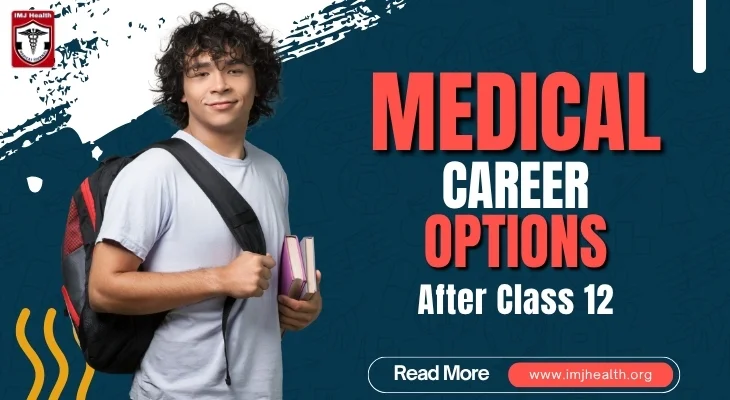
Choosing a career after Class 12 is one of the most important decisions a student makes. For students interested in biology, healthcare, medicine, and human well-being, the healthcare sector offers a much wider range of opportunities than becoming a doctor alone.
Medicine remains one of the most respected professions, but today's healthcare system also depends on nurses, pharmacists, physiotherapists, medical laboratory professionals, radiographers, psychologists, nutritionists, public health specialists, researchers, and many other professionals.
This makes it important for students to understand the different medical and healthcare career options after Class 12 before deciding on a particular course.
The right choice depends not only on academic performance but also on personal interests, aptitude, preferred working environment, financial considerations, course duration, and long-term career goals.
Understanding Medical and Healthcare Careers
When students hear the word "medical career," they often immediately think of MBBS. However, healthcare is a multidisciplinary field.
A modern hospital, for example, requires doctors to diagnose and treat patients, nurses to provide continuous patient care, pharmacists to manage medicines, laboratory professionals to conduct diagnostic tests, physiotherapists to support rehabilitation, and medical technologists to operate specialised equipment.
There are also careers outside hospitals. Healthcare professionals work in:
- Research institutions
- Pharmaceutical companies
- Diagnostic laboratories
- Public health organisations
- Universities and colleges
- Healthcare technology companies
- Rehabilitation centres
- Community health programmes
- Government health departments
- Clinical research organisations
Therefore, students should look beyond a single profession and explore the wider healthcare ecosystem.
1. MBBS – Bachelor of Medicine and Bachelor of Surgery
MBBS is generally the first course considered by students who want to become doctors.
The programme combines theoretical medical education with practical and clinical training. Students study subjects such as anatomy, physiology, biochemistry, pathology, pharmacology, microbiology, medicine, surgery, paediatrics, obstetrics and gynaecology, among others.
After completing the required training and registration requirements, graduates can practise medicine according to the regulations applicable to their jurisdiction. Many graduates subsequently pursue postgraduate specialisation.
Who may consider MBBS?
MBBS may be suitable for students who:
- Have a strong interest in medicine and patient care
- Enjoy studying biology and medical sciences
- Are comfortable working in clinical environments
- Can handle a demanding academic schedule
- Have patience and good communication skills
- Are prepared for a relatively long education and training pathway
Students should understand that becoming a doctor requires a significant long-term commitment. If you are still weighing up specialisation paths, our guide on how to choose a medical specialization: trends, salaries and demand offers useful context on where different clinical careers lead.
2. BDS – Bachelor of Dental Surgery
Students interested specifically in oral and dental health can consider BDS.
Dentistry combines medical knowledge with practical clinical skills. Dental professionals diagnose and manage conditions affecting the teeth, gums, mouth, and related structures.
A career in dentistry can involve clinical practice, specialised dental care, academic teaching, research, or other areas of oral healthcare.
Students who enjoy detailed practical work and have an interest in oral health may find dentistry worth exploring.
3. BAMS – Bachelor of Ayurvedic Medicine and Surgery
BAMS is an undergraduate programme focused on Ayurveda and healthcare practices within the framework of the applicable regulatory system.
Students learn about Ayurvedic concepts alongside relevant areas of biomedical and clinical education included in the curriculum.
Graduates can explore professional opportunities in clinical practice, wellness, research, education, and related healthcare fields, subject to applicable regulations.
Students considering BAMS should understand the nature of the curriculum and the professional opportunities available after graduation rather than choosing it solely as an alternative to MBBS. Our article on integrative medicine approaches combining yoga, meditation and conventional care explores how traditional and modern systems increasingly work alongside each other.
4. BHMS – Bachelor of Homoeopathic Medicine and Surgery
BHMS is an undergraduate programme associated with homoeopathic medicine.
Students who are interested in this field can explore the course structure, eligibility requirements, regulatory framework, clinical training, and career opportunities before making a decision.
As with any professional healthcare programme, students should choose a course based on genuine interest and an understanding of the profession rather than simply choosing an option because admission appears easier.
5. Bachelor of Pharmacy (B.Pharm)
Pharmacy is another important part of the healthcare system.
Pharmacy professionals learn about medicines, their preparation, properties, appropriate use, quality, and related pharmaceutical sciences.
A B.Pharm graduate may explore opportunities in areas such as:
- Pharmaceutical manufacturing
- Quality control
- Quality assurance
- Drug regulatory affairs
- Pharmacovigilance
- Clinical research
- Medical information
- Pharmaceutical sales and marketing
- Research and development
Students interested in chemistry, medicines, laboratory work, and the pharmaceutical industry may find pharmacy an interesting career direction. For a closer look at where this field can lead at the doctoral level, see our guide on PhD in pharmaceutical sciences: scope, research areas and career impact.
6. Bachelor of Physiotherapy (BPT)
Physiotherapy focuses on helping individuals improve movement, physical function, mobility, and quality of life.
Physiotherapists may work with people recovering from injuries, surgeries, neurological conditions, sports injuries, musculoskeletal problems, and other conditions requiring rehabilitation.
A career in physiotherapy can involve hospitals, rehabilitation centres, sports facilities, clinics, and other healthcare settings.
Students who enjoy anatomy, physical sciences, patient interaction, and rehabilitation may consider this pathway.
7. Nursing
Nursing is one of the most important professions within healthcare.
Nurses play a central role in patient care, monitoring, treatment support, health education, and coordination with other healthcare professionals.
Depending on the programme and applicable regulations, students can pursue nursing education through recognised undergraduate pathways.
Nursing can provide opportunities in hospitals, community healthcare, public health, education, research, and specialised clinical areas.
Strong communication, empathy, patience, responsibility, and the ability to work in teams are particularly important qualities for nursing professionals.
8. Medical Laboratory Science
Not every healthcare professional works directly with patients.
Medical laboratory professionals play a crucial role in diagnosis by conducting and analysing laboratory tests.
Depending on the programme, students may study areas such as:
- Clinical biochemistry
- Microbiology
- Haematology
- Pathology
- Immunology
- Molecular diagnostics
Laboratory professionals may work in hospitals, diagnostic centres, research laboratories, pharmaceutical organisations, and other healthcare institutions.
This can be an attractive option for students who enjoy laboratory work, scientific investigation, and analytical processes. Our article on pathology and laboratory medicine: diagnostic advances and biomarker discovery covers how rapidly this field is evolving.
9. Radiology and Medical Imaging
Medical imaging has become an essential part of modern diagnosis.
Students can explore programmes related to radiography and medical imaging, depending on the educational and regulatory pathways available to them.
Professionals in this area may work with technologies used for diagnostic imaging and assist healthcare teams in obtaining appropriate images for clinical evaluation.
An interest in technology, anatomy, healthcare, and precision-based work can be useful for students considering this field.
10. Occupational Therapy
Occupational therapy focuses on helping individuals participate in everyday activities despite physical, developmental, neurological, or other challenges.
Occupational therapists may work with children, adults, older people, and individuals undergoing rehabilitation.
The field combines healthcare knowledge with practical approaches to improve independence and participation in daily life.
Students interested in rehabilitation and patient-centred care can explore occupational therapy as a possible career.
11. Psychology and Mental Health Careers
Mental health has become an increasingly important component of healthcare and community well-being.
Students interested in human behaviour, psychological processes, counselling, and mental health can explore academic pathways in psychology and related disciplines.
However, students should distinguish between studying psychology as an academic subject and qualifying for regulated professional roles. The education, supervised training, and registration requirements can vary depending on the profession and location.
12. Nutrition and Dietetics
Nutrition plays an important role in preventive healthcare and the management of many health conditions.
Students interested in food science, biology, human nutrition, and health can explore degree programmes related to nutrition and dietetics.
Career opportunities may exist in hospitals, wellness organisations, community programmes, food companies, research, education, and private practice, depending on qualifications and applicable regulations.
13. Public Health
Healthcare is not limited to treating individual patients.
Public health focuses on improving health at the population and community level. It can involve areas such as disease prevention, health promotion, epidemiology, health policy, environmental health, and community programmes.
Students who are interested in healthcare but prefer working with communities, data, policy, research, or health programmes can explore public health as a potential career direction.
14. Biotechnology and Medical Research
Students who enjoy laboratory science and research may also consider biotechnology or related life-science programmes.
Biotechnology intersects with areas such as:
- Molecular biology
- Genetics
- Drug discovery
- Diagnostics
- Biomedical research
- Cell biology
- Bioinformatics
These careers can be particularly suitable for students who enjoy experimentation, scientific investigation, and research rather than primarily patient-facing work.
Skills Needed for a Medical Career
Academic performance is important, but healthcare professionals need a broader combination of skills.
1. Communication
Healthcare professionals regularly communicate with patients, families, colleagues, researchers, and other professionals.
Being able to explain information clearly and listen carefully can significantly improve professional interactions.
2. Empathy
Patients may be anxious, uncomfortable, or uncertain about their condition. Understanding their concerns and responding respectfully is an important part of healthcare.
3. Scientific Thinking
Healthcare education involves understanding scientific concepts and applying them to practical situations.
Students should develop the ability to analyse information rather than relying entirely on memorisation.
4. Attention to Detail
Small details can be important in healthcare, whether reading laboratory results, administering medicines, maintaining patient records, or following clinical procedures.
5. Teamwork
Healthcare is rarely a one-person activity. Doctors, nurses, pharmacists, therapists, laboratory professionals, technicians, and administrative teams often work together.
6. Emotional Resilience
Healthcare professionals may encounter stressful situations, emergencies, illness, and difficult conversations. Developing emotional resilience can help students prepare for professional responsibilities.
7. Continuous Learning
Medical knowledge and healthcare technology continue to evolve. Professionals need to keep learning throughout their careers.
How to Choose the Right Medical Career After Class 12
There is no single healthcare career that is appropriate for every student.
Before selecting a course, students can consider the following questions.
What subjects do you enjoy?
A student who enjoys chemistry and medicines may have different interests from someone who enjoys anatomy, patient interaction, research, or technology.
Do you want direct patient interaction?
Some careers involve regular interaction with patients, while others are primarily laboratory-, research-, technology-, or data-oriented.
How long are you willing to study?
Different healthcare professions have different education and training requirements. Students should understand the complete pathway before making a commitment.
What type of work environment do you prefer?
Consider whether you would prefer:
- A hospital
- A laboratory
- A clinic
- A research facility
- A pharmaceutical company
- A public health organisation
- An academic institution
- A healthcare technology organisation
What are your long-term goals?
Some students may want clinical practice, while others may be interested in research, teaching, management, entrepreneurship, public health, or the pharmaceutical industry.
Understanding these goals can make course selection easier.
The Importance of Career and College Guidance
The number of healthcare courses and institutions can make decision-making complicated, particularly for students and families unfamiliar with the admission process.
Career guidance can help students understand their interests, compare possible academic pathways, examine eligibility requirements, and evaluate colleges and courses based on relevant factors.
Platforms such as Study Decode's guide on choosing the best stream for your career after Class 10 can be useful for students looking for structured support with areas such as career guidance, course selection, and college selection.
However, students should still verify admission requirements, accreditation, eligibility criteria, fees, curriculum, and regulatory information directly from the relevant official institutions before applying.
Medical Career Planning Should Begin Early
Career planning does not have to begin only after Class 12 results are announced.
Students can start by understanding the subjects they enjoy, researching different healthcare professions, learning about entrance examinations, and exploring the educational pathways associated with different careers.
For students considering medicine, this may include understanding entrance requirements and preparing academically well in advance. Others may discover that pharmacy, physiotherapy, nursing, biotechnology, public health, medical laboratory science, or another healthcare field better matches their interests.
The objective should not be to follow the most popular course but to identify a profession that aligns with the student's interests, abilities, expectations, and long-term goals. If you are still uncertain about your academic direction, Study Decode's three simple steps to decide the right stream after Class 10 offers a practical starting point.
A career in healthcare can take many different forms. While becoming a doctor through MBBS is an important pathway, it is only one part of a much broader healthcare ecosystem.
Students completing Class 12 should therefore explore multiple possibilities before making a final decision. Understanding the nature of each profession, educational requirements, career environment, skills involved, and long-term opportunities can help students make a more informed choice.
The most suitable healthcare career is not necessarily the one that is most popular. It is the one that matches a student's interests, abilities, values, and long-term professional goals.
Early research, reliable career guidance, and careful comparison of courses and institutions can help students approach this important decision with greater clarity.