Medicine is often associated with scientific evidence, clinical guidelines, diagnostic tests, medicines, and technological innovation. These elements are essential to modern healthcare, but medicine is also fundamentally concerned with human experiences. Patients do not experience illness only as a collection of symptoms or laboratory values. They experience it through fear, uncertainty, memories, relationships, expectations, loss, hope, and changes in their everyday lives.
This is where literature can make an important contribution to healthcare.
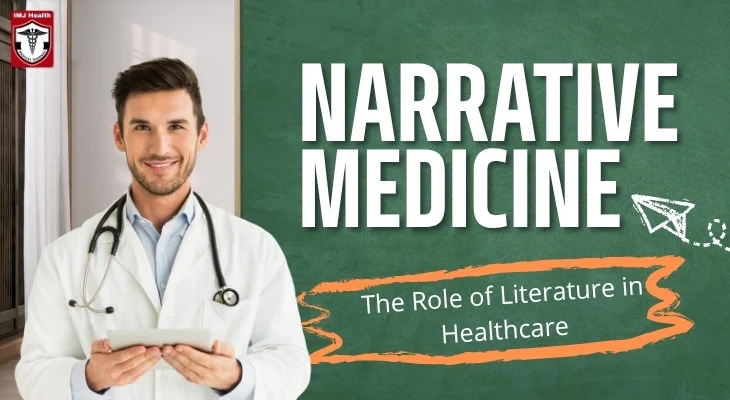
Narrative medicine is an interdisciplinary approach that recognizes the importance of stories in clinical practice. It encourages healthcare professionals to listen carefully to patients' accounts of illness, understand the meanings attached to those experiences, and reflect on the human dimensions of medical care. The approach is closely associated with physician and scholar Rita Charon, who described narrative competence as the ability to acknowledge, absorb, interpret, and respond to the stories and experiences of others.
Literature can contribute to this process because reading fiction, poetry, memoirs, biographies, and other forms of narrative requires attention to voice, perspective, context, emotion, ambiguity, and human relationships. These are also important elements of communication between patients and healthcare professionals.
What Is Narrative Medicine?
Narrative medicine is an approach to healthcare that emphasizes the importance of understanding patients as people with individual stories rather than viewing them exclusively through their diagnoses.
A patient's medical record may state that a person has diabetes, cancer, depression, cardiovascular disease, or another condition. However, the diagnosis does not tell the complete story of the individual.
Two patients with the same diagnosis may have completely different experiences. One person may be primarily concerned about employment, another about caring for children, while another may be worried about financial costs or losing independence.
Narrative medicine asks healthcare professionals to pay attention to these individual perspectives.
Rita Charon's influential 2001 article in JAMA presented narrative medicine as a model associated with empathy, reflection, professionalism, and trust. She argued that narrative competence can help physicians engage with patients, colleagues, their own professional experiences, and wider society.
Therefore, narrative medicine does not suggest replacing scientific medicine with literature. Instead, it adds another dimension to clinical practice: the ability to understand and respond to the human story surrounding illness. If you are exploring this field at a research level, our article on literature and medicine: narrative ethics in health humanities examines related questions in greater depth.
Why Do Stories Matter in Healthcare?
Stories are one of the ways human beings communicate experiences.
When patients visit a doctor, they rarely communicate through isolated clinical facts. They describe when something started, how it changed their daily routine, what they fear, what they have already tried, and how the condition has affected their family or work.
Consider a patient who says:
"I have not been sleeping properly for the last three months."
The clinical significance of this statement may depend on what comes next. Perhaps the patient is experiencing chronic pain. Perhaps they recently lost a family member. Perhaps they are afraid of losing their job. Perhaps they are caring for an elderly parent.
The symptom is important, but the story surrounding the symptom can provide additional context.
Narrative approaches encourage clinicians to listen for that context.
This does not mean that every patient interaction needs to become an extended conversation. Rather, it means recognizing that effective healthcare communication requires attention to the patient's perspective.

Literature as a Tool for Understanding Human Experience
Literature has long explored subjects that are also central to healthcare: illness, death, suffering, disability, aging, relationships, identity, grief, trauma, resilience, and recovery.
A literary text can place readers inside experiences that may be unfamiliar to them.
A novel may present the world from the perspective of a person living with a disability. A memoir may describe the experience of surviving serious illness. A poem may express grief in a way that ordinary conversation cannot easily reproduce.
For healthcare professionals, engaging with such narratives can create opportunities for reflection.
Literature does not provide clinical instructions. A novel cannot replace a medical textbook, clinical trial, or treatment guideline. Its contribution is different.
It can encourage readers to ask:
- What might this experience feel like from another person's perspective?
- What assumptions am I making about this character?
- How does the character's social environment influence the experience of illness?
- What is communicated indirectly?
- What remains unsaid?
- How does language influence our understanding of suffering?
These questions can be valuable in developing more attentive approaches to patient communication.
Close Reading and Clinical Attention
One of the most interesting connections between literature and medicine is the practice of close reading.
Close reading involves paying careful attention to language, structure, tone, perspective, omissions, metaphors, contradictions, and other details within a text.
In narrative medicine, literary techniques such as close reading and reflective writing have been proposed as ways of developing narrative competence.
There is an important parallel with clinical communication.
A healthcare professional listening to a patient must often notice more than the literal words being spoken. The patient's pauses, repeated concerns, changes in tone, uncertainty, and choice of words may provide additional context.
For example, a patient might repeatedly say that they are "fine" while describing significant changes in their daily life. A purely literal interpretation may miss the emotional or social meaning behind the statement.
Close attention to language can encourage healthcare professionals to listen more carefully without assuming that they already know what a patient means.
Literature and Empathy in Medical Practice
Empathy is frequently discussed in relation to patient-centered healthcare. Literature may provide one avenue through which students and professionals can explore different perspectives and experiences.
Reading does not automatically make someone more empathetic. Simply completing a novel or reading a poem cannot guarantee a particular clinical behavior.
However, literary narratives can create structured opportunities for readers to encounter perspectives different from their own.
A reader may enter the world of a character whose age, culture, socioeconomic circumstances, disability, illness, or family situation differs significantly from their own.
This process can raise awareness of the complexity of human experience.
In medical education, discussions of literary works can therefore be used to explore questions such as:
- How does illness influence identity?
- How does a patient describe vulnerability?
- What happens when medical language conflicts with personal experience?
- How do family members experience illness differently from patients?
- How do cultural expectations influence healthcare decisions?
Such questions move beyond the purely biological understanding of disease and encourage students to consider the broader context in which healthcare occurs.
Narrative Medicine and Patient-Centered Care
Patient-centered care recognizes the importance of understanding patients' preferences, values, circumstances, and needs.
Narrative medicine complements this perspective by focusing attention on the stories through which patients communicate those experiences.
For example, a treatment decision may appear straightforward from a purely clinical perspective. However, the patient's personal circumstances may influence how they understand the available options.
A patient may prioritize maintaining independence. Another may be more concerned about returning to work. Someone else may place greater importance on spending time with family.
These priorities are not necessarily visible in a laboratory report.
Listening to the patient's narrative can help healthcare professionals understand what matters to the individual.
This does not mean that every patient preference can or should determine medical treatment. Clinical evidence, safety, professional judgment, informed consent, and ethical considerations remain essential. Narrative medicine instead adds another layer of understanding to the clinical encounter. For a related perspective on how patient experience is captured at scale, see our article on real-world data integration and RWE in regulatory decisions.
The Importance of Patient Narratives
Patients have increasingly used memoir, blogs, essays, poetry, podcasts, and other forms of storytelling to describe their experiences of illness.
Patient narratives can challenge assumptions about what illness looks like from the outside.
A chronic condition, for instance, may be medically manageable while still producing significant emotional, social, or financial challenges.
Similarly, recovery may not always follow a simple progression from illness to health. Patients may experience uncertainty, recurrence, adaptation, and changes in identity.
Listening to patient narratives can therefore help healthcare professionals recognize that clinical outcomes and lived experiences are related but not identical.
The laboratory value may improve while the patient's anxiety remains.
A surgery may be technically successful while the patient continues to struggle with changes in body image.
A chronic disease may be medically controlled while affecting employment or family relationships.
Narrative approaches encourage attention to these dimensions.
The Role of Poetry in Healthcare
Poetry has a distinctive place in discussions of narrative medicine because it often expresses experiences that are difficult to communicate through ordinary prose.
Poetry can compress complex emotions into a small number of words. It can use metaphor, rhythm, imagery, silence, repetition, and ambiguity to communicate experiences of pain, grief, uncertainty, love, and loss.
For medical students and healthcare professionals, poetry can become a reflective exercise.
A poem about illness may raise questions about vulnerability or identity. A poem about death may lead to discussion about mortality and professional boundaries. A poem about caregiving may reveal the emotional burden experienced by families.
The purpose is not to interpret a poem as though it were a medical case. Instead, literary discussion can create space for reflection on experiences that healthcare professionals regularly encounter but may not always have opportunities to discuss.
Fiction and the Experience of Illness
Fiction allows writers to construct characters and situations that explore the relationship between illness and society.
Medical themes appear across numerous literary traditions. Characters may experience epidemics, disability, mental distress, aging, war injuries, infectious disease, or social exclusion.
Such representations can reveal how societies understand illness at different points in history.
Literary researchers can therefore examine questions such as:
- How is illness represented in different periods?
- How are doctors portrayed in literature?
- How are patients represented?
- What cultural beliefs influence representations of disease?
- How does literature portray disability?
- How are mental health conditions represented?
- What role does medical authority play in literary narratives?
These questions demonstrate why the study of literature can contribute to broader conversations about healthcare and society. Scholars working in this area may find our guide on how to write a strong abstract for a medical research paper useful when preparing interdisciplinary work for publication.
Memoirs and First-Person Medical Narratives
Medical memoirs offer another important form of narrative.
Unlike fictional works, memoirs are generally rooted in an author's own experiences. They may describe diagnosis, treatment, hospitalization, disability, caregiving, chronic illness, or recovery.
First-person narratives can reveal details that are often difficult to capture through conventional clinical documentation.
A patient may describe the experience of waiting for a diagnosis, entering a hospital, communicating with doctors, dealing with uncertainty, or adapting to life after treatment.
These accounts can be valuable educational resources because they encourage healthcare professionals to consider how clinical systems are experienced from the patient's side.
At the same time, memoirs represent individual experiences and should not automatically be treated as universal accounts of illness.
Narrative Medicine and Medical Education
Medical education traditionally places considerable emphasis on anatomy, physiology, pathology, pharmacology, diagnostics, and clinical treatment.
These scientific foundations are indispensable.
However, medical students also need to learn how to communicate with patients, understand ethical dilemmas, work with families, deal with uncertainty, and reflect on the emotional dimensions of healthcare.
Literature can be incorporated into medical education through:
1. Literary reading
Students may read selected novels, short stories, poems, essays, or memoirs related to illness and healthcare.
2. Close-reading exercises
Students can examine how a text represents illness, identity, suffering, caregiving, or medical authority.
3. Reflective writing
Students may write about clinical encounters, observations, emotions, or ethical questions.
4. Group discussion
Literary texts can provide starting points for conversations about communication, culture, empathy, professional identity, and patient experience.
5. Interdisciplinary teaching
Literature scholars and healthcare professionals can collaborate to examine medical narratives from both humanistic and clinical perspectives.
These activities can complement—not replace—scientific and clinical training.
Narrative Medicine and Professional Reflection
Healthcare professionals regularly encounter emotionally demanding situations.
They may care for critically ill patients, communicate difficult diagnoses, support families through bereavement, or experience the death of a patient.
Professional training does not always provide sufficient opportunities to reflect on these experiences.
Reflective writing can offer one possible avenue.
Writing about a clinical experience can help professionals examine questions such as:
- What happened?
- How did I respond?
- How did the patient respond?
- What assumptions influenced my actions?
- What did I understand at the time?
- What might I understand differently now?
- What could I learn from the experience?
The objective is not simply emotional expression. Structured reflection can help professionals examine their communication, decision-making, assumptions, and professional identity.
Literature, Culture, and Healthcare
Healthcare does not exist independently of culture.
Ideas about illness, healing, disability, aging, death, family responsibility, and mental health can vary across communities.
Literature provides a rich record of cultural attitudes and social beliefs.
Studying literary representations of illness can therefore help researchers explore how different societies understand health and disease.
For example, a literary text may reveal:
- cultural beliefs about illness;
- attitudes toward disability;
- expectations surrounding caregiving;
- gender roles in healthcare;
- perceptions of mental illness;
- relationships between traditional and modern medicine;
- social stigma associated with particular conditions.
This makes narrative medicine particularly relevant to cultural studies and interdisciplinary humanities research.
The Connection Between Literature and Medical Humanities
Narrative medicine forms part of the broader field commonly known as the medical humanities.
Medical humanities brings healthcare into conversation with disciplines such as literature, philosophy, history, ethics, visual arts, anthropology, and cultural studies.
The underlying idea is that healthcare involves questions that cannot be answered entirely through biomedical knowledge.
What does it mean to live with illness?
How should suffering be understood?
How does culture shape medical decision-making?
What responsibilities do healthcare professionals have toward patients?
How should societies understand disability and aging?
These are simultaneously medical, ethical, social, cultural, and human questions.
Literary scholarship can contribute to these conversations by examining how health and illness are represented through language and narrative. Researchers working at this intersection may find our guide on the role of artificial intelligence in medical research useful for understanding how data-driven and humanistic approaches can complement each other.
Narrative Medicine and Digital Storytelling
The relationship between healthcare and storytelling is also changing because of digital media.
Patients now share health experiences through blogs, social media posts, online communities, videos, podcasts, and digital memoirs.
These platforms have created new forms of patient storytelling.
Researchers can study how digital narratives influence perceptions of illness, medical professionals, health information, and patient identity.
At the same time, digital storytelling raises important ethical questions.
Patient privacy, informed consent, misinformation, commercialization, and the permanent nature of online content all require careful consideration.
Therefore, digital narratives should be studied critically rather than treated as automatically reliable representations of medical reality.
Ethical Considerations in Narrative Medicine
Narrative approaches in healthcare must be accompanied by strong ethical standards.
Patient stories often contain sensitive personal information. Healthcare professionals, researchers, educators, and writers must therefore consider confidentiality, consent, privacy, and potential harm.
A patient's story should not be treated merely as educational material or literary content.
When real patient narratives are used in teaching, research, publications, or public communication, appropriate ethical procedures should be followed.
Another important concern is representation.
One patient's experience cannot automatically represent every person with the same diagnosis.
Narrative medicine should therefore encourage attention to individual experiences without turning individual stories into stereotypes.
Limitations of Narrative Medicine
Narrative medicine has considerable potential, but it also has limitations.
First, reading literature does not automatically produce better clinical communication. Educational activities need thoughtful design and appropriate facilitation.
Second, literary interpretation is inherently open to different perspectives. Two readers may understand the same story differently.
Third, patient narratives can be incomplete or selective. Like all forms of storytelling, they are shaped by memory, language, context, and perspective.
Fourth, narrative approaches should not be used as substitutes for clinical evidence.
A patient's story is important, but diagnosis and treatment also require scientific knowledge, clinical expertise, evidence-based guidelines, and appropriate investigations.
The most useful approach is therefore complementary: scientific medicine provides essential knowledge about disease, while narrative approaches can contribute to understanding the person experiencing that disease.
How Literature Can Support Better Healthcare Communication
Effective communication requires both speaking and listening.
Literature can encourage careful attention to language, perspective, ambiguity, and context. These skills may be useful when healthcare professionals communicate with patients and families.
A clinician who listens carefully may be better positioned to identify what the patient is actually concerned about.
A clinician who understands cultural context may avoid making unnecessary assumptions.
A clinician who reflects on previous interactions may identify communication patterns that need improvement.
Narrative medicine therefore places value on a skill that is fundamental but sometimes overlooked in technologically advanced healthcare: the ability to listen to another person's story.
Future Possibilities for Narrative Medicine
The future of narrative medicine is likely to remain interdisciplinary.
Researchers from medicine, literature, psychology, sociology, medical education, ethics, cultural studies, and digital humanities can collaborate to investigate how narratives influence healthcare experiences.
Potential areas of research include:
- narrative approaches in medical education;
- patient memoirs and chronic illness;
- literature and mental health;
- representations of disability in contemporary fiction;
- healthcare narratives in postcolonial literature;
- illness and identity;
- digital patient storytelling;
- narrative approaches to end-of-life care;
- literature and healthcare communication;
- medical professionals as writers;
- poetry and reflective practice;
- cultural representations of disease;
- gender and illness narratives;
- migration, health, and identity;
- narrative approaches to patient-centered care.
These topics demonstrate that literature and healthcare are not isolated academic fields. They can intersect around shared questions concerning people, identity, suffering, communication, culture, and society.
Literature and Healthcare: Two Different Ways of Understanding Illness
Medicine seeks to understand illness through scientific observation, evidence, diagnosis, treatment, and prevention.
Literature approaches human experience through language, narrative, imagination, interpretation, and representation.
These approaches answer different questions.
Medicine may ask:
What is causing the patient's symptoms?
Literature may ask:
What does living with those symptoms mean to the person experiencing them?
Medicine may investigate how a disease develops.
Literature may explore how illness changes a person's identity or relationships.
Medicine may measure treatment outcomes.
Narrative approaches may examine how patients understand recovery, uncertainty, or loss.
Neither perspective is sufficient by itself for understanding the complete human experience of healthcare.
Their intersection creates an opportunity for richer inquiry.
Narrative medicine demonstrates that healthcare is not only a scientific practice but also a deeply human one.
Literature gives readers opportunities to encounter different perspectives, examine complex emotions, explore cultural assumptions, and reflect on experiences of illness and care. Through close reading, reflective writing, memoir, poetry, fiction, and patient narratives, healthcare professionals and students can explore dimensions of medicine that are difficult to capture through clinical data alone.
The goal is not to place literature above science. Rather, narrative medicine encourages a broader understanding of what it means to care for another person.
A diagnosis describes a medical condition. A story can reveal how that condition becomes part of someone's life.
This intersection between literature, culture, and healthcare also opens valuable opportunities for interdisciplinary scholarship. Researchers interested in literary representations of illness, medical humanities, narrative theory, cultural studies, psychology, and related fields can explore these connections through dedicated academic research. The Journal of Creative Research in English Literature and Culture (JCRELC) provides an interdisciplinary platform for scholarship connecting English literature and cultural studies with areas such as psychology, philosophy, sociology, and other humanities disciplines.

Ultimately, narrative medicine reminds us that behind every diagnosis is a person, and behind every medical record is a story worth understanding.
Recommended Reads
If you found this article useful, you may also enjoy these related reads from our archive: