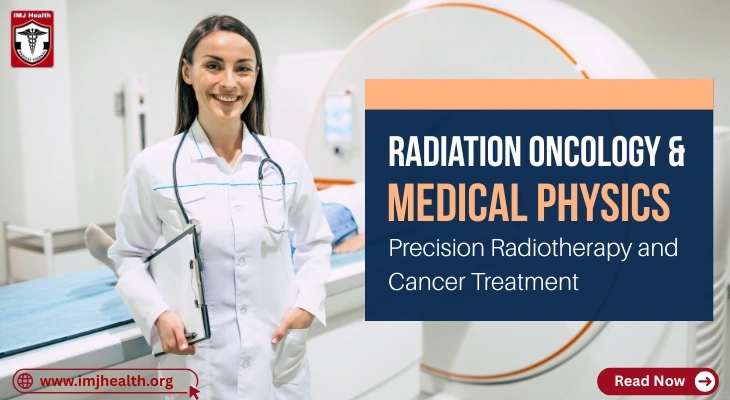
Radiation oncology and medical physics are critical pillars of modern cancer treatment, combining advanced physics principles with clinical oncology to deliver highly targeted and effective radiation therapies. These fields focus on using controlled radiation doses to destroy cancer cells while minimizing damage to surrounding healthy tissues.
In 2026, cancer care is undergoing a significant transformation through precision radiotherapy, image-guided radiation techniques, artificial intelligence (AI), adaptive treatment planning, and advanced medical physics modeling. These innovations are improving survival rates, reducing side effects, and making cancer treatment more personalized and effective. For broader context on AI's role in healthcare, see The Role of Artificial Intelligence in Medical Research.
As cancer remains one of the leading global health challenges, radiation oncology continues to evolve toward more accurate, safer, and patient-specific treatment approaches. Medical physicists play a crucial role in ensuring radiation safety, optimizing dose delivery, and integrating advanced technologies into clinical workflows.
Among the most important advancements are precision radiotherapy, AI-assisted treatment planning, and innovations in medical physics that are reshaping how cancer is treated worldwide.
This blog explores radiation oncology and medical physics in 2026, focusing on precision radiotherapy and cancer treatment and how these innovations are transforming oncology care.
Understanding Radiation Oncology and Medical Physics
What Is Radiation Oncology?
Radiation oncology is a medical specialty that uses high-energy radiation to treat cancer.
It aims to:
- Destroy cancer cells
- Shrink tumors
- Prevent cancer recurrence
- Relieve cancer-related symptoms
Radiation therapy is often used alongside surgery and chemotherapy.
What Is Medical Physics?
Medical physics applies physics principles to medicine, especially in:
- Radiation therapy planning
- Imaging systems
- Dosimetry (radiation dose measurement)
- Safety protocols
Medical physicists ensure treatments are accurate and safe.
How Radiation Therapy Works
Radiation therapy damages the DNA of cancer cells, preventing them from growing and dividing.
Healthy cells can often repair themselves better than cancer cells, making radiation an effective targeted treatment.
Precision Radiotherapy in 2026
Precision radiotherapy refers to highly targeted radiation treatments that maximize tumor destruction while minimizing harm to healthy tissues.
Image-Guided Radiotherapy (IGRT)
IGRT uses real-time imaging to:
- Locate tumors accurately
- Adjust patient positioning
- Improve treatment precision
Intensity-Modulated Radiation Therapy (IMRT)
IMRT allows radiation beams to be shaped and adjusted to match tumor size and shape.
Benefits include:
- Reduced side effects
- Higher tumor control
- Better dose distribution
Stereotactic Radiosurgery (SRS)
SRS delivers high-dose radiation in a single or few sessions.
It is commonly used for:
- Brain tumors
- Small metastatic lesions
Stereotactic Body Radiotherapy (SBRT)
SBRT targets tumors in the body with high precision, often used for:
- Lung cancer
- Liver tumors
- Prostate cancer
Role of Medical Physics in Cancer Treatment
Medical physics ensures radiation therapy is safe, accurate, and effective.
Treatment Planning Systems
Physicists use advanced software to:
- Calculate radiation dose
- Model tumor response
- Design treatment plans
Dosimetry and Radiation Safety
Dosimetry ensures:
- Accurate radiation dose delivery
- Patient safety
- Compliance with medical standards
Quality Assurance in Radiotherapy
Medical physicists regularly check:
- Equipment calibration
- Beam accuracy
- Treatment consistency

AI in Radiation Oncology (2026)
Artificial intelligence is transforming cancer treatment planning and delivery.
AI in Treatment Planning
AI helps:
- Generate optimized radiation plans
- Reduce planning time
- Improve dose accuracy
AI in Tumor Detection
AI assists in:
- Identifying tumor boundaries
- Detecting microscopic disease
- Analyzing imaging scans
Adaptive Radiotherapy
AI enables treatment plans to be adjusted based on:
- Tumor shrinkage
- Patient anatomy changes
- Response to treatment
For related insights on AI diagnostics, see The Black Box of AI Diagnostics: Liability Gaps, Legal Challenges, and Future Accountability Models.
Advanced Technologies in Radiotherapy
Proton Therapy
Proton therapy uses charged particles instead of traditional radiation.
Benefits include:
- Minimal damage to surrounding tissues
- Better precision for deep tumors
- Reduced long-term side effects
Carbon Ion Therapy
An advanced form of particle therapy used for:
- Resistant tumors
- Complex cancer cases
FLASH Radiotherapy
A cutting-edge technique delivering ultra-high dose radiation in milliseconds.
It may:
- Reduce tissue damage
- Improve treatment efficiency
Personalized Cancer Treatment Approaches
Cancer treatment is becoming increasingly personalized.
Genomic-Based Radiotherapy
Treatment is tailored based on:
- Tumor genetics
- Radiation sensitivity
- Patient-specific biology
For related insights, see What's Next in Cancer Treatment: Advances Beyond Immunotherapy.
Combined Modality Therapy
Radiation is often combined with:
- Chemotherapy
- Immunotherapy
- Targeted therapy
This improves overall effectiveness.
Role of Imaging in Radiation Oncology
Imaging is essential for accurate treatment.
Common imaging tools include:
- CT scans
- MRI
- PET scans
They help:
- Locate tumors
- Monitor response
- Guide treatment adjustments
For related insights, see Radio Diagnosis and Imaging 2026: AI in Radiology, MRI Advances, and Early Detection.
Challenges in Radiation Oncology
Despite advancements, challenges remain.
- Radiation Side Effects – Some patients may experience: Fatigue, Skin irritation, and Tissue inflammation.
- Equipment Costs – Advanced radiotherapy systems are expensive.
- Access to Care – Not all regions have access to advanced cancer treatment technologies.
- Technical Complexity – High precision systems require skilled professionals and strict quality control.
The Future of Radiation Oncology Beyond 2026
Radiation oncology is expected to become even more precise and intelligent.
Future trends may include:
- Fully AI-driven radiotherapy planning
- Real-time tumor tracking during treatment
- Nanotechnology-enhanced radiation delivery
- Personalized radiation dosing models
- Integrated digital oncology platforms
Cancer treatment will become increasingly targeted and less invasive. For those considering doctoral research in this area, Top 10 Pharmaceutical Research Topics for PhD offers guidance on selecting impactful research directions.
Radiation oncology and medical physics in 2026 are transforming cancer care through precision radiotherapy, AI-driven treatment planning, and advanced radiation technologies. These innovations are improving treatment accuracy, reducing side effects, and enhancing patient survival outcomes.
From image-guided radiotherapy and proton therapy to adaptive AI-based treatment systems, modern oncology is becoming more personalized and precise than ever before. Medical physicists play a vital role in ensuring safety, accuracy, and innovation in cancer treatment delivery.
As technology continues to advance, radiation oncology will remain a cornerstone of cancer care, offering more effective, targeted, and patient-centered treatment options for the future.
Continue Exploring Our Blog
- What's Next in Cancer Treatment: Advances Beyond Immunotherapy
- Radio Diagnosis and Imaging 2026: AI in Radiology, MRI Advances, and Early Detection
- The Role of Artificial Intelligence in Medical Research
- The Black Box of AI Diagnostics: Liability Gaps, Legal Challenges, and Future Accountability Models
- Oncology Research 2026: Immunotherapy, Targeted Therapy, and Precision Medicine Advances