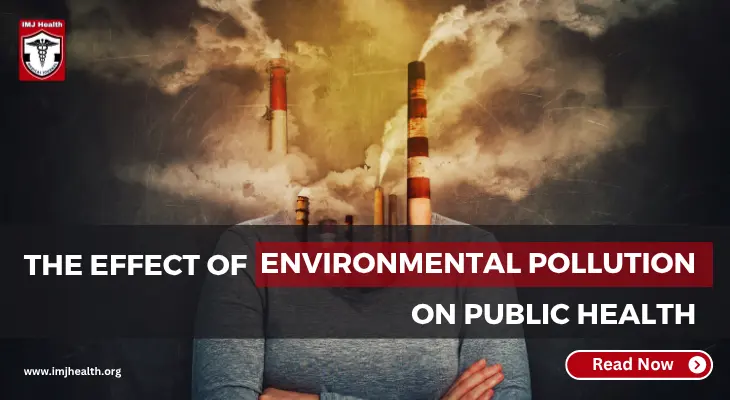
Environmental pollution is not just an ecological issue—it is a profound public health crisis. Pollutants in air, water, soil, and food have direct and indirect effects on human health, contributing to a rise in diseases, mortality rates, and economic burdens globally. Understanding the link between pollution and public health is critical to advancing preventive healthcare, shaping policy, and developing pharmaceutical and medical interventions.
Understanding Environmental Pollution: Types and Sources:
Environmental pollution occurs when harmful substances contaminate natural resources, disrupting ecosystems and threatening human well-being. There are several key types of pollution affecting public health today:
- Air Pollution: Emissions from vehicles, industrial activities, and burning of fossil fuels release harmful gases like nitrogen dioxide (NO₂), sulfur dioxide (SO₂), ozone, and particulate matter (PM2.5 and PM10).
- Water Pollution: Contaminants from sewage, agricultural runoff, heavy metals, and industrial waste lead to unsafe drinking water and marine ecosystem damage.
- Soil Pollution: Excessive use of pesticides, heavy metals, and industrial waste affects food safety and groundwater quality.
- Noise Pollution: Prolonged exposure to high decibel levels causes hearing loss, sleep disturbances, and stress-related illnesses.
- Light and Thermal Pollution: Disrupts biological rhythms and ecosystems, affecting both mental health and biodiversity.
The Direct Impact on Human Health:
Pollution-related diseases are on the rise globally. According to the World Health Organization (WHO), nearly 7 million people die annually from air pollution-related causes. The impact of pollutants manifests in both acute and chronic conditions, many of which are preventable.
Common Health Conditions Linked to Pollution:
- Respiratory Diseases: Asthma, bronchitis, COPD, and lung cancer due to air pollution.
- Cardiovascular Issues: Increased risk of hypertension, stroke, and heart disease.
- Neurological Disorders: Long-term exposure to heavy metals and fine particulate matter may impair brain development and trigger conditions like Alzheimer’s and Parkinson’s.
- Gastrointestinal Infections: Contaminated water leads to cholera, typhoid, and other infections.
- Cancers: Certain pollutants, especially industrial chemicals and arsenic in water, are linked to various cancers.
- Birth Defects and Developmental Delays: Exposure to environmental toxins during pregnancy affects fetal development.
Vulnerable Populations: Who Is Most at Risk?
Not all populations are equally affected by environmental pollution. The most vulnerable include:
- Children: Developing immune and respiratory systems make them more susceptible to toxins.
- Pregnant Women: Exposure to pollutants can harm fetal health and development.
- Elderly Individuals: Preexisting conditions can worsen with environmental exposure.
- Low-Income Communities: Often located near industrial zones or waste disposal areas, with limited access to healthcare and clean environments.
PhD in Effect of Environmental Pollution on Public Health:
A PhD in this area allows researchers to study how pollutants in air, water, and soil contribute to disease outbreaks, chronic health conditions, and overall community well-being. Scholars examine exposure pathways, analyze public health data, and develop interventions or policies to mitigate health risks. This research is vital for advancing environmental health strategies worldwide.
Global Health Data and Research:
Numerous studies and public health reports show a direct correlation between pollution and disease burden:
- A 2022 Lancet Commission Report linked 9 million premature deaths worldwide to pollution.
- Research published in Environmental Health Perspectives revealed that long-term exposure to PM2.5 particles can reduce life expectancy by 1.8 years on average.
- WaterAid reported over 2 billion people lack access to safe drinking water, contributing to 1.5 million preventable deaths annually.

Role of Healthcare Systems and Medical Research:
The healthcare system plays a pivotal role in identifying, managing, and mitigating pollution-related diseases. Medical research is increasingly focusing on:
- Developing drugs for pollution-induced diseases (e.g., anti-inflammatory agents for airways).
- Creating predictive models using environmental and epidemiological data.
- Studying biomarkers for early detection of pollution-related pathologies.
- Promoting community-level interventions and risk communication strategies.
Pharmaceutical and public health professionals must collaborate to combat the long-term effects of environmental exposure and support patient education and prevention.
Preventive Measures and Policy Implications:
At the Government Level:
- Enforce air and water quality standards.
- Regulate industrial emissions and waste disposal.
- Promote clean energy and sustainable agriculture.
- Integrate environmental risk factors in national healthcare strategies.
At the Community and Individual Level:
- Advocate for green spaces and pollution awareness.
- Use masks and purifiers in high-risk zones.
- Avoid exposure during pollution peaks (e.g., smog hours).
- Support local and global environmental health initiatives.
Environmental pollution is a silent yet powerful driver of global disease. It exacerbates health disparities, burdens healthcare systems, and contributes to preventable mortality. A multidisciplinary approach—uniting healthcare, research, and environmental policy—is essential for reducing its impact. For medical and pharmaceutical professionals, understanding these connections is vital to shaping better therapeutic, diagnostic, and public health outcomes.
As IMJ Health continues to support open-access research in public health, we encourage scholars to submit studies that explore the intersection of environmental science and medicine.