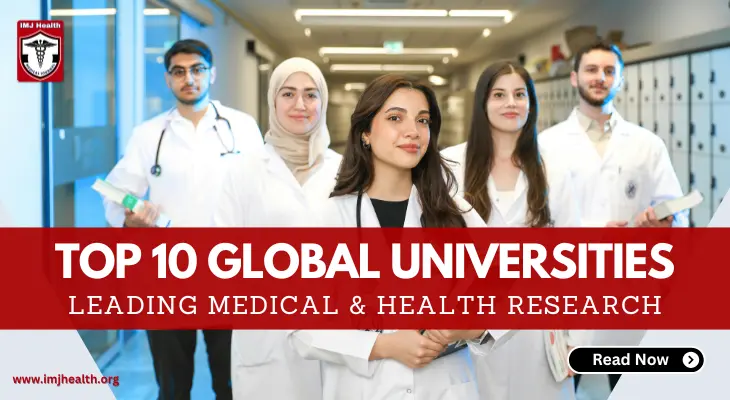
Medical and health research drives innovation in treatments, vaccines, and public health policies. The world’s best universities in this field combine cutting-edge research, advanced facilities, and collaborations with top hospitals.
This blog ranks the top 10 universities excelling in medical and health research based on:
- ✔ Research output (Publications, citations)
- ✔ Nobel Prizes & major medical breakthroughs
- ✔ Industry partnerships & funding
- ✔ Global rankings (QS, Times Higher Education, ARWU)
1. Harvard University (USA):
When it comes to medical breakthroughs, Harvard University stands in a league of its own. Home to the world-renowned Harvard Medical School and affiliated with 15 elite teaching hospitals, this Ivy League institution has been at the forefront of medical research for over a century. From pioneering the mRNA technology behind COVID-19 vaccines to groundbreaking work in cancer immunotherapy, Harvard's researchers consistently push the boundaries of what's possible in medicine.
Why #1?
- Home to Harvard Medical School, the world’s most cited medical research institution.
- Key research areas: Cancer, genomics, neuroscience, and public health.
- Notable breakthroughs: mRNA vaccine development, Alzheimer’s research.
- Affiliated hospitals: Massachusetts General, Brigham and Women’s.
Rankings:
- #1 in QS Medicine Rankings (2024)
- Most Nobel Prizes in Medicine (16 winners)
2. University of Oxford (UK):
Steeped in centuries of academic excellence, the University of Oxford has cemented its position as a global leader in medical innovation. The birthplace of the Oxford-AstraZeneca COVID-19 vaccine continues to make waves with its cutting-edge research in vaccinology, tropical medicine, and clinical trials. Oxford's unique collegiate system fosters interdisciplinary collaboration, bringing together brilliant minds across medicine, biology, and data science.
Why #2?
- Pioneered the Oxford-AstraZeneca COVID-19 vaccine.
- Strong in: Immunology, epidemiology, and tropical medicine.
- Key institutes: Wellcome Centre for Human Genetics, Jenner Institute.
Rankings:
- #2 in Times Higher Education (THE) Clinical Medicine
- Top 3 in vaccine research globally
3. Johns Hopkins University (USA):
Synonymous with medical excellence, Johns Hopkins University has been revolutionizing healthcare since opening the first research-based medical school in 1893. Today, it remains a powerhouse in pandemic response (thanks to its famous COVID-19 dashboard), neurosurgery, and public health research. The university's intimate connection with the top-ranked Johns Hopkins Hospital creates an unparalleled environment for translational medicine.
Why #3?
- Johns Hopkins Hospital is ranked #1 in the U.S. (Newsweek 2024).
- Global leader in: Pandemic tracking (Johns Hopkins COVID-19 Dashboard), neurology, and cardiology.
- Home to Bloomberg School of Public Health (#1 in public health research).
Rankings:
- #3 in QS Medicine (2024)
- #1 in Public Health (U.S. News)
4. Stanford University (USA):
Where Silicon Valley meets cutting-edge medicine, Stanford University is redefining healthcare through technological innovation. Nestled in the heart of tech innovation, this West Coast powerhouse excels in merging artificial intelligence with medical research, from developing AI diagnostic tools to advancing robotic surgery techniques. Stanford's culture of entrepreneurship has spawned numerous medical startups bringing research from lab to bedside.
Why #4?
- AI & tech-driven medical research (AI diagnostics, robotic surgery).
- Key strengths: Cancer immunotherapy, stem cell research.
- Silicon Valley ties (Google Health, Apple Health collaborations).
Rankings:
- Top 5 in THE Clinical & Health Rankings
- #1 in Biomedical Engineering (2024)
5. University of Cambridge (UK):
With a legacy that includes the discovery of DNA's structure and the development of IVF, the University of Cambridge continues to shape modern medicine. Its researchers are currently making strides in genetic therapies, neurodegenerative disease research, and stem cell technology. The Cambridge Biomedical Campus, Europe's largest center of medical research and education, provides state-of-the-art facilities for groundbreaking work.
Why #5?
- Nobel-winning research (DNA structure, IVF technology).
- Focus areas: Genetic medicine, neurodegenerative diseases.
- Affiliated with Cambridge Biomedical Campus (Europe’s largest research hub).
Rankings:
- #4 in QS Medicine Rankings
- Top 3 in Europe for medical research funding

6. Karolinska Institute (Sweden):
The prestigious Karolinska Institute holds the unique distinction of selecting Nobel laureates in Physiology or Medicine. This Swedish institution punches far above its weight in medical research, particularly in fields like precision medicine and immunology. Karolinska's strong ties with Sweden's pharmaceutical industry and emphasis on translational research ensure its discoveries have real-world impact.
Why #6?
- Selects Nobel Prize in Physiology/Medicine winners.
- Specializes in: Precision medicine, cancer research.
- Strong industry ties (AstraZeneca, Pfizer partnerships).
Rankings:
- #1 in Scandinavia for Medicine
- Top 10 in THE Clinical Rankings
7. Massachusetts Institute of Technology (MIT) (USA):
MIT brings its signature engineering excellence to the medical field, pioneering revolutionary approaches to healthcare challenges. From developing CRISPR gene-editing technology to creating advanced drug delivery systems, MIT researchers consistently bridge the gap between engineering and medicine. The institute's Koch Institute for Integrative Cancer Research exemplifies its interdisciplinary approach to tackling complex medical problems.
Why #7?
- Bioengineering & AI in healthcare (e.g., CRISPR gene editing).
- Key labs: Koch Institute for Integrative Cancer Research.
- Focus: Drug delivery systems, medical robotics.
Rankings:
- #1 in Biotechnology (QS 2024)
- Top 10 in Life Sciences
8. University of Toronto (Canada):
As Canada's premier medical research institution, the University of Toronto boasts an impressive legacy that includes the discovery of insulin. Today, it leads in diverse fields from stem cell research to artificial intelligence in healthcare. The university's partnership with world-class hospitals like SickKids creates a vibrant ecosystem for medical innovation and education.
Why #8?
- Leading in: Stem cell research, neuroscience.
- Affiliated with SickKids Hospital (#1 pediatric research center).
- Key discovery: Insulin isolation (Banting & Best).
Rankings:
- #1 in Canada for Medical Research
- Top 15 in QS Medicine
9. University of California, San Francisco (UCSF) (USA):
Dedicated exclusively to health sciences, UCSF stands as a beacon of medical research on the West Coast. With the highest per capita NIH funding of any American university, UCSF researchers are making significant contributions in HIV/AIDS treatment, precision medicine, and neurology. The university's focus on health equity and population health sets it apart in addressing real-world healthcare challenges.
Why #9?
- #1 in NIH funding per capita (biomedical research).
- Specializations: HIV/AIDS, precision medicine.
- Linked to UCSF Medical Center (Top 5 U.S. hospital).
Rankings:
- Top 10 in Clinical Medicine (ARWU)
- #1 in Pharmacy & Pharmacology (QS)
10. ETH Zurich (Switzerland):
Europe's answer to MIT, ETH Zurich combines Swiss precision with groundbreaking innovation in medical technology. While not a traditional medical school, this science and technology powerhouse excels in biomedical engineering, neurotechnology, and computational biology. Its collaborations with pharmaceutical giants like Roche and Novartis ensure its research has immediate clinical applications.
Why #10?
- Leader in: Biomedical engineering, neurotechnology.
- Key research: Brain-machine interfaces, AI diagnostics.
- Strong industry partnerships (Roche, Novartis).
Rankings:
- Top 10 in THE Life Sciences
- #1 in Europe for tech-driven medicine
Key Trends in future:
- ✔ AI & machine learning – Accelerating drug discovery (e.g., Stanford’s AI cancer detection).
- ✔ Global collaborations – More joint research between top universities.
- ✔ Personalized medicine – DNA-based treatments (Karolinska, Harvard).
These universities drive global medical progress, from vaccine development to AI-powered diagnostics. Whether you're a student, researcher, or healthcare professional, these institutions offer unparalleled opportunities.
References:
- QS World University Rankings 2024: Medicine
(Official ranking of top medical universities worldwide) - Times Higher Education World University Rankings 2024 (Clinical & Health)
(Global benchmark for research excellence in medicine) - Nobel Prize Awarding Institutions
(For verifying Nobel-winning medical research)