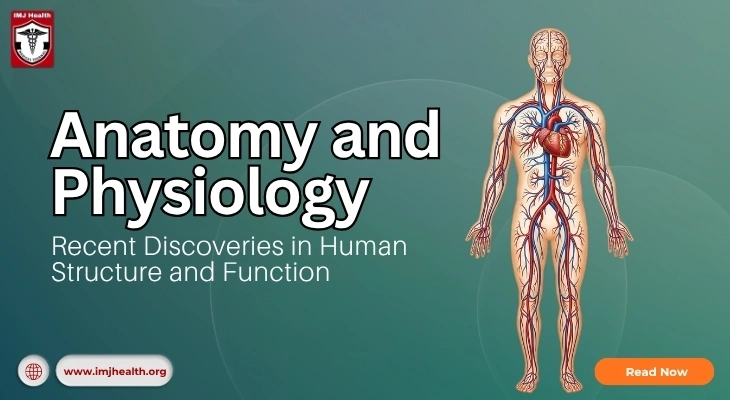
Anatomy and physiology form the foundation of medical science, providing essential knowledge about how the human body is structured and how it functions. Every advancement in medicine—from surgical innovations and disease treatment to biotechnology and personalized healthcare—depends on a deep understanding of the body's organs, tissues, systems, and biological processes.
While anatomy traditionally focused on the physical structure of the human body and physiology emphasized how those structures function, scientific discoveries continue to reveal that the body is far more dynamic and interconnected than previously understood. Advances in imaging technologies, molecular biology, genomics, artificial intelligence (AI), and biomedical engineering are uncovering new insights into human biology, transforming long-standing medical understanding.
In 2026, anatomy and physiology research are entering an exciting era of precision science, where researchers can observe body systems at cellular, molecular, and even genetic levels. Scientists are improving understanding of organ communication, tissue regeneration, immune responses, neurological function, and metabolic regulation. These discoveries are influencing medicine, surgery, pharmacology, rehabilitation, and preventive healthcare. For broader context on AI's role in healthcare, see The Role of Artificial Intelligence in Medical Research.
Among the most fascinating developments are recent discoveries involving human structure and biological function. Emerging research is helping scientists better understand previously overlooked body systems, organ interactions, tissue behavior, and adaptive biological responses.
This blog explores recent discoveries in anatomy and physiology in 2026, focusing on new insights into human structure and function and how these findings are reshaping modern medicine and biological science.
Understanding Anatomy and Physiology
Although closely related, anatomy and physiology focus on different aspects of the human body.
Anatomy
Anatomy studies the structure of the body, including: Organs, Muscles, Bones, Blood vessels, Nerves, and Tissues.
It examines how body parts are organized and interconnected.
Physiology
Physiology focuses on how body systems function.
This includes understanding: Organ performance, Hormonal activity, Circulation, Metabolism, Immune response, and Brain signaling.
Together, anatomy and physiology help explain how the body maintains health and responds to disease.
Advances in Human Imaging and Structural Discovery
Modern imaging technologies are helping researchers visualize the body with unprecedented precision.
High-Resolution Medical Imaging
Advanced imaging systems now provide highly detailed views of tissues and organs.
Modern tools include: High-resolution MRI, Functional imaging, 3D anatomical mapping, and Cellular-level scanning.
These technologies are revealing structural details once impossible to observe.
Improved imaging is enhancing diagnosis, surgical planning, and research.
Digital Human Mapping
Researchers are increasingly creating comprehensive digital maps of the human body.
These projects aim to better understand: Organ networks, Cell interactions, Tissue organization, and Blood supply systems.
Digital mapping helps scientists explore how body systems interact in real time.

New Insights Into Connective Tissue
Recent research has expanded understanding of connective tissue systems.
Scientists increasingly recognize the importance of fascia—a network of connective tissue that surrounds muscles, nerves, and organs.
Emerging findings suggest fascia may influence: Movement efficiency, Pain signaling, Injury recovery, and Musculoskeletal coordination.
This is influencing rehabilitation and sports medicine.
Discoveries in Organ Communication
One of the most important physiological findings is that organs communicate more extensively than once believed.
The Gut-Brain Connection
Researchers continue discovering stronger links between digestive health and brain function.
The gut-brain axis influences: Mood regulation, Cognitive performance, Immune function, and Stress response.
Gut microbes increasingly appear important in neurological and emotional health.
This research is influencing nutrition and mental health medicine. For related insights, see Advancements in Microbiome Research.
Heart-Brain Interaction
Scientists are learning more about how cardiovascular and neurological systems interact.
Blood flow patterns, inflammation, and nervous system signaling may affect: Cognitive performance, Emotional regulation, and Stroke recovery.
These discoveries are improving understanding of brain health.
Immune System Communication
Modern physiology increasingly views immunity as interconnected with nearly every organ system.
Immune signaling may influence: Metabolism, Brain activity, Aging, and Chronic inflammation.
This is reshaping understanding of disease development.
Tissue Regeneration and Healing
Researchers continue exploring how the body repairs itself.
Stem Cell Research
Stem cells remain central to regenerative medicine.
Potential applications include: Tissue repair, Organ regeneration, Bone healing, and Nervous system recovery.
Scientists increasingly study how tissues naturally regenerate after injury. For related advances, see Stem Cell Therapy in 2025: Latest Breakthroughs and Clinical Trials.
Organ Repair Mechanisms
Researchers are uncovering new information about how organs heal.
Studies suggest some tissues may have greater regenerative potential than previously understood.
This may improve treatment for: Heart damage, Liver disease, Nerve injury, and Musculoskeletal trauma.
Personalized Regeneration Strategies
Future therapies may use individualized biological data to improve healing.
Researchers increasingly explore: Genetic repair signals, Cellular communication pathways, and Precision tissue engineering.
Advances in Brain and Nervous System Physiology
Neuroscience discoveries continue reshaping physiology.
Brain Plasticity Research
Scientists increasingly understand the brain's ability to adapt.
Neuroplasticity helps explain: Learning, Memory formation, Recovery after injury, and Rehabilitation success.
This research supports improved treatment for neurological disorders. For related insights, see Neuroscience and Brain Health Research.
Nervous System Mapping
Advanced technologies are helping researchers map neural networks more precisely.
This improves understanding of: Pain pathways, Sensory processing, Cognitive function, and Motor coordination.
Better mapping may improve treatment for chronic neurological conditions.
Metabolism and Hormonal Function Discoveries
Physiology research increasingly highlights the complexity of metabolism.
Scientists are learning more about: Hormone interactions, Energy regulation, Sleep metabolism links, and Inflammatory signaling.
Hormonal balance is increasingly recognized as central to whole-body health.
Circadian Rhythm Physiology
Body timing systems are receiving increased attention.
Researchers are exploring how circadian rhythms influence: Sleep quality, Hormone release, Digestion, and Immunity.
Disruptions may contribute to chronic illness risk.
Artificial Intelligence in Anatomy and Physiology Research
AI is increasingly accelerating biological research.
AI systems help analyze: Large biological datasets, Imaging results, Cellular patterns, and Physiological simulations.
This improves research efficiency and medical understanding. For insights into AI diagnostics, see The Black Box of AI Diagnostics and the Problem of Liability.
Challenges in Anatomy and Physiology Research
Despite major discoveries, several challenges remain.
Biological Complexity – Human physiology remains highly complex and interconnected. Many systems are still not fully understood.
Ethical Research Considerations – Advanced biological research must maintain strong ethical standards.
Translating Discoveries Into Care – Applying research findings to clinical practice may take time.
The Future of Anatomy and Physiology Beyond 2026
The future of anatomy and physiology is becoming increasingly personalized and technology-driven.
Expected developments include: Digital body simulations, Better organ interaction models, Personalized physiological monitoring, Precision regenerative medicine, and Smarter biological imaging systems.
Researchers increasingly aim to understand the body as an integrated system rather than isolated organs. For those considering doctoral research in this area, Top 10 Pharmaceutical Research Topics for PhD offers guidance on selecting impactful research directions.
Anatomy and physiology in 2026 are entering an exciting era of discovery, driven by advances in imaging, regenerative medicine, neuroscience, organ communication, and AI-powered research. Scientists are uncovering deeper insights into human structure and biological function, improving medical understanding across nearly every healthcare field.
These discoveries are helping reshape how clinicians diagnose disease, support healing, and understand body systems as highly interconnected networks. While biological complexity and research challenges remain, the future of anatomy and physiology is increasingly focused on precision, integration, and individualized understanding of human health.
As scientific knowledge continues expanding, anatomy and physiology will remain central to medical innovation, helping shape a future where healthcare becomes smarter, more preventive, and more personalized.