Conceptual Foundations of Non-Invasive Therapeutics
Contemporary medicine has progressively changed to no longer rely on mechanical access-based invasive intervention, instead shifting to energy-based therapies that manipulate tissue without violating anatomical integrity. Such a shift is not only aligned with technological advances but also with a conceptual reconsideration of the meaning of therapeutic intervention. Within this transformation, focused ultrasound is at the centre of this change. It exists at the crossroads of physics, engineering, imaging, and clinical medicine, where sound energy takes the place of surgical cleavers as the main treatment agent.
Focused ultrasound is attractive because it has dual properties. It is not a very invasive delivery method but achieves very localized effect. Acoustic waves travel harmlessly through intervening tissue and then converge at a focal point where the density of energy is high enough to cause biological alteration. This feature allows clinicians to treat deep-seated pathology without cuts, risks of anaesthesia, and long-term healing. For research scholars, focused ultrasound becomes an interesting topic of discussion since it defies classical principles in regard to access, dose delivery, and tissue response. For broader context on non-invasive therapeutic innovations, see Digital Therapeutics and Remote Health: The Rise of Software-Driven Treatments.
Conceptually, an approach towards ultrasound requires that it should not be viewed as a device but more as a system. It uses imaging feedback and control-oriented energy generation and transmission. The components participate in dynamic interaction with nonlinear, heterogeneous, and patient-specific biological tissue. The process of optimization thus becomes a multidimensional issue dealing with physics, biological variability, computational modelling, and clinical constraints. The rest of this blog is constructed towards this combined knowledge in a systematic manner.
Historical Trajectory and Scientific Maturation
The history of focused ultrasound in science dates back to research on the propagation of acoustic energy undertaken during the first half of the twentieth century. Early experiments proved that ultrasonic waves were capable of heating biological tissue but lacked precision and safety measures. The use of ultrasonic lesioning of neural tissue was investigated by researchers mid-century, especially in psychiatric and neurological conditions, but there was insufficient imaging guidance and the risk was high.
The turning point came with the development of imaging and electronics. Diagnostic ultrasound grew to become the first test to achieve the safety and interpretability of acoustic imaging. Similar advances in magnetic resonance imaging came with unprecedented soft tissue contrast and quantitative thermometry. When these imaging systems were combined with high-intensity focused ultrasound transducers, a new treatment paradigm was created. Treatment might now be planned, tracked, and adjusted as it progressed.
As a research aspect, the historical evolution of focused ultrasound brings out how convergence — and not individual invention — developed the technology. Phased array electronics, signal processing, real-time imaging, and computational modelling all transformed a laboratory curiosity into a clinical tool. This is an important direction for scholars to understand, as it helps to see why interdisciplinary fluency is today a crucial aspect of optimization rather than tunnel specialization.
Acoustic Physics and Energy Localization
Classical wave physics is at the core of focused ultrasound. Ultrasonic waves are mechanical longitudinal waves characterized by frequency, wavelength, amplitude, and phase. Therapeutic ultrasound frequencies may range from hundreds of kilohertz to several megahertz. Lower frequencies offer deeper penetration and create larger focal zones, while higher frequencies provide finer spatial resolution.
Constructive interference is the principle of focusing. By curving the transducer surface or electronically adjusting phase delays on a phased array, multiple converging wavefronts converge at a specified focal length. Acoustic intensity becomes very high at this point, with surrounding areas having very low exposure. This spatial selectivity is the characteristic that distinguishes focused ultrasound among other forms of energy-based treatments including radiation. The principles of energy-based interventions parallel innovations discussed in Innovations in Clinical Research.
Exposure at the focal point may result in thermal or biochemical effects depending on the exposure parameters. Thermal effects appear due to absorption of acoustic energy and temperature increase. Mechanical effects from radiation force and cavitation arise from oscillating or collapsing microbubbles, resulting in local stress. These mechanisms are not exclusive to each other and tend to co-exist. Their relative contribution varies with frequency, intensity, pulse length, and tissue characteristics.
For doctoral research, this physics base is not background but the scheme on which all optimization strategies are built. It is impossible to design safe or effective therapeutic protocols without understanding wave propagation, scattering, absorption, and nonlinear effects.
Biological Interaction and Tissue Response
Biological tissue is not a passive medium. It is heterogeneous, anisotropic, and dynamic. Acoustic energy affects fat, muscle, bone, blood, and neural tissue differently. Absorption coefficients vary, meaning the same acoustic exposure might produce different thermal responses in different tissues. Perfusion further complicates matters, creating a heat sink and redistributing energy away from the focal region.
The best-known mechanism of focused ultrasound therapy is thermal. Prolonged exposure to temperatures above critical levels results in membrane disruption, protein denaturation, and coagulative necrosis. This is the mechanism underlying tumour ablation and fibroid treatment. Mechanical effects from stable and inertial cavitation add new biological implications such as increased cell membrane permeability, vascular permeability, and mechanical fragmentation.
Significantly, tissue response is non-linear. Biological effects can be disproportionately large even with small variations in acoustic pressure or exposure time, especially when cavitation thresholds are surpassed. This nonlinearity brings both opportunity and risk. Optimization must maximize therapeutic benefit while incorporating safety factors that account for variability in tissue composition and physiological condition.
Transducer Architecture and System Design
The transducer is the engine of focused ultrasound therapy. Its architecture defines efficiency, penetration depth, focal geometry, and flexibility. Early systems used single-element spherically curved transducers with fixed focus. Although conceptually simple, these lacked flexibility and required mechanical repositioning to treat volumes.
Modern systems use phased array transducers made of dozens to thousands of individually controlled elements. By electronically varying the phase and amplitude of each array element, three-dimensional electronic steering of the focal point becomes possible. This enables rapid scanning of treatment volumes and compensation for anatomical variation. Advanced arrays can shape focal regions into elongated lesions or create several foci simultaneously.
Practical constraints must also be incorporated into transducer design, including acoustic efficiency, electrical efficiency, cooling, and patient comfort. Water baths or gel pads are frequently employed to ensure effective transmission, while active cooling prevents transducer overheating. Transducer optimization is a fertile research field spanning materials science, electronics, acoustics, and ergonomics.
Imaging Integration and Treatment Guidance
Imaging serves as the sensory system for focused ultrasound therapy. Localization of acoustic energy without imaging would not be achievable. Two major imaging modalities prevail in clinical practice: ultrasound imaging and magnetic resonance imaging.
Ultrasound imaging offers portability, real-time visualization, and cost-effectiveness. It excels at tracking mechanical effects and tissue movement. However, its poor soft tissue contrast and qualitative thermometry limit its application for certain procedures. Magnetic resonance imaging provides high-resolution anatomical details and can measure temperature changes using the proton resonance frequency shift method. This enables closed-loop control where acoustic power is varied according to real-time thermal feedback. The integration of imaging with therapeutics is conceptually similar to developments in Interpretable AI as a Clinical Requirement in Decision Support Systems where feedback loops enhance clinical decision-making.
The combination of imaging and therapeutics transforms focused ultrasound from a static energy delivery system into an adaptive intervention system. Treatment plans can be adjusted ad-hoc using available tissue response information. For PhD scholars, this integration can be understood within the context of cyber-physical systems, in which sensing, computation, and actuation form a feedback loop with biological tissue.
Clinical Oncology Applications
The most developed clinical uses of focused ultrasound are oncological. Thermal ablation protocols have been used to treat solid tumours in organs including the uterus, prostate, liver, and breast. Focused ultrasound offers unique benefits compared to surgery: organ preservation, lower infection risk, and shorter post-operative period.
Treatment planning involves delineating tumour borders, identifying immediately adjacent critical structures, and finding acoustic pathways free of bone or gas interfaces. During therapy, real-time imaging ensures that the desired thermal dose is applied evenly across the lesion while avoiding damage to nearby tissue. For advances in cancer treatment beyond ablation, see What's Next in Cancer Treatment: Advances Beyond Immunotherapy.
Beyond ablation, focused ultrasound is also gaining interest as an adjunctive therapy. It can modulate the tumour microenvironment and vasculature, potentially enhancing immune activation. This positions focused ultrasound not only as an alternative to surgery but also as a complementary modality within broader cancer treatment strategies.

Neurological and Functional Interventions
In neurology, focused ultrasound represents a conceptual breakthrough. The skull was traditionally viewed as an insurmountable obstacle to sound waves. Advances in phased array technology and CT-based skull modelling have enabled transcranial focusing by compensating for phase distortion.
Clinical focused ultrasound has been used for functional ablation of thalamic nuclei in movement disorders. Unlike deep brain stimulation, it requires no implanted hardware. More recently, lower-intensity focused ultrasound has been investigated for neuromodulation and reversible blood-brain barrier opening. These neurological applications connect to broader research in Neuroscience and Brain Health Research.
These applications extend focused ultrasound from purely destructive intervention to functional modulation and targeted delivery. For researchers, this raises important questions about neural plasticity, safety, ethics, and long-term effects. Optimization in this field focuses on maximizing precision, reversibility, and minimizing off-target effects.
Drug Delivery and Microbubble Dynamics
Focused ultrasound-mediated drug delivery is mediated by the interaction between ultrasound and circulating microbubbles. Ultrasound exposure causes microbubbles to vibrate, producing mechanical stresses that increase vascular permeability. This facilitates localized delivery of chemotherapeutic agents, genes, or nanoparticles.
Optimization requires controlling acoustic pressure, pulse timing, and synchronization with systemic drug delivery. High pressures may cause vascular damage, while lower pressures produce insufficient effect. Identifying therapeutic windows requires both computational and experimental models.
This domain demonstrates translational research in which physics-driven processes are harnessed for pharmacological benefit. For graduate scholars, it offers opportunities to work across disciplines including acoustics, pharmacokinetics, and molecular biology. These drug delivery innovations complement discussions in Drug Delivery Systems: Innovations, Importance and Research Scope.
Safety Frameworks and Regulatory Considerations
Safety is the primary focus in ultrasound use. Regulatory approval requires strong evidence of predictable tissue response and low rates of adverse events. Safety limits are enforced through thermal dose models, cavitation monitoring, and real-time feedback systems.
Patient-specific factors such as anatomy, perfusion, and co-morbidities require adaptive protocols. Motion compensation strategies — including respiratory gating and real-time beam adjustment — prevent targeting errors. For researchers, safety is not a limit but a design parameter that shapes innovation.
Computational Modeling and Optimization Strategies
Computational models are essential to focused ultrasound research. Acoustic propagation models predict pressure fields accounting for tissue heterogeneity. Thermal models determine temperature increases and lesion formation. Control algorithms incorporate imaging feedback to enable dynamic power delivery.
Machine learning methods are gaining interest for predicting treatment effects and optimizing parameters from large datasets. These methods offer promise for personalized therapy but require transparency and validation. This is both a mathematical and an ethical challenge.
Future Directions and Research Frontiers
Focused ultrasound is transforming from a dedicated ablative device into a multi-purpose therapeutic platform, reconstructing the conceptualization of non-invasive medicine. Current clinical interventions are just precursors of a larger research effort increasingly informed by computational intelligence, enhanced materials, biological understanding, and system-level optimization. The future of focused ultrasound will involve not just improvement but evolution into an intelligent, multimodal therapeutic system. Below are the most important research frontiers.
Artificial Intelligence Driven Treatment Planning
The implementation of AI and machine learning in focused ultrasound workflows is a promising research direction. Conventional treatment planning uses deterministic models approximating tissue properties as averages. Although effective, these models struggle to capture inter-patient variability, anatomical complexity, and nonlinear biological response.
Machine learning models trained on large datasets of imaging, acoustic parameters, and treatment effects can predict optimal patient-specific sonication strategies. Such systems can learn correlations between skull density variations, tissue perfusion changes, and treatment effects, personalizing plans to meet individual patient limitations. Deep learning techniques are also under investigation for rapid target volume and critical structure segmentation, reducing planning time and improving accuracy. The role of AI in medical research is further explored in The Role of Artificial Intelligence in Medical Research.
For research scholars, this frontier raises methodological issues related to data bias, model interpretability, and clinical validation. Ensuring transparency and safety of AI-driven recommendations will be crucial for regulatory acceptance and ethical implementation.
Closed Loop Adaptive Control Systems
Contemporary focused ultrasound devices typically operate in a semi-closed loop fashion, where imaging feedback informs manual adjustments by clinicians. Future systems aim for closed-loop control, in which acoustic power, phase, and duration are continuously modified based on real-time tissue feedback.
Advances in MR thermometry, cavitation mapping, and acoustic emission monitoring provide increasingly accurate measurements of tissue response. When combined with adaptive control algorithms, these feedback signals can regulate energy input to achieve desired therapeutic endpoints without overheating or undesired cavitation. These systems resemble cyber-physical architectures in which sensing, computation, and actuation are tightly coupled.
Research in this area requires robust control theory applied to nonlinear, time-varying, and noisy biological systems. Stability, safety, and fail-safe mechanisms become primary design considerations as autonomy increases.
Expansion Beyond Thermal Ablation
Although thermal ablation remains the most developed application, non-thermal mechanisms are becoming research focuses. Low-intensity focused ultrasound has been shown to modulate neural activity, alter cellular signalling pathways, and affect immune responses without tissue necrosis.
These bioeffects are mediated by mechanical stress, ion channel activation, and mechanotransduction rather than temperature increase. This research opens possibilities for neuromodulation in psychiatric and neurological conditions, as well as immunomodulatory treatments in cancer. The ability to affect biological function without tissue destruction conceptually extends focused ultrasound from disabling intervention to functional management.
A central research challenge in these regimes is understanding dose-response relationships, as effects are subtle, cumulative, and highly context-specific.
Targeted Drug and Gene Delivery Platforms
Focused ultrasound-mediated drug delivery is poised to advance precision medicine. By transiently enhancing vascular permeability or opening the blood-brain barrier, focused ultrasound enables spatially selective delivery of therapeutic agents that would otherwise be excluded.
Future research aims to optimize microbubble formulations, nanoparticle carriers, and sonication strategies to maximize delivery efficacy while minimizing vascular injury. Focused ultrasound is also being investigated with gene-editing methods such as CRISPR-based systems for localized genetic modulation. These approaches align with advances in Stem Cell Therapy in 2025: Latest Breakthroughs and Clinical Trials where targeted delivery is equally critical.
This frontier lies at the interface of acoustics, molecular biology, and pharmacology. For doctoral researchers, it offers opportunities to develop translational platforms that bridge bench and bedside while addressing safety, scalability, and regulatory complexity.
Advanced Transducer Materials and Architectures
Transducer technology continues to evolve with new materials and fabrication methods. Capacitive micromachined ultrasonic transducers (CMUTs) and piezoelectric composites offer potential improvements in bandwidth, efficiency, and miniaturization. These developments enable wearable, implantable, or catheter-based focused ultrasound systems, extending therapeutic reach beyond traditional external platforms.
Flexible and conformal transducers that adapt to patient anatomy represent another promising direction. Such designs would improve acoustic coupling, reduce energy loss, and enhance patient comfort, particularly during long treatments.
Materials science research also contributes to improved thermal management, durability, and electromagnetic compatibility — all critical for clinical deployment.
Multimodal Therapeutic Integration
Future focused ultrasound systems envision multimodal therapeutic strategies. Combination with radiation therapy, immunotherapy, chemotherapy, and real-time imaging creates synergistic treatment paradigms. For example, focused ultrasound can co-target tumours with hyperthermia to enhance radiation sensitivity or increase immune infiltration to improve checkpoint inhibitor efficacy.
Research in this area focuses on timing, sequencing, and dose optimization. Understanding how focused ultrasound alters tissue microenvironment at molecular and cellular scales is necessary for effective combination therapies.
This integration also challenges single-modality clinical trial designs, requiring new frameworks capable of capturing complex interactions and long-term effects.
Standardization and Quantitative Biomarkers
As focused ultrasound applications diversify, measurement standardization becomes increasingly urgent. Quantitative biomarkers of acoustic dose, tissue response, and therapeutic efficacy are necessary to compare studies, optimize protocols, and ensure reproducibility.
Research aims to establish standardized acoustic metrics, thermal dose models, and imaging biomarkers correlated with biological outcomes. These tools will enable multicenter trials and accelerate regulatory approval.
For scholars, this represents an opportunity to perform foundational work that systematically establishes the field rather than focusing solely on device innovation.
Ethical and Societal Dimensions
Finally, the future of focused ultrasound must be viewed within broader ethical and social perspectives. Non-invasive neuromodulation and functional interventions raise questions about consent, long-term effects, and potential misuse. Access to non-invasive technologies also brings equity and global health disparities into focus. These ethical considerations are part of larger discussions in Top 10 Public Health Challenges in 2025.
Research in this area overlaps with medical ethics, policy, and science communication. Ensuring that technological evolution aligns with societal values will be as essential as technical excellence.
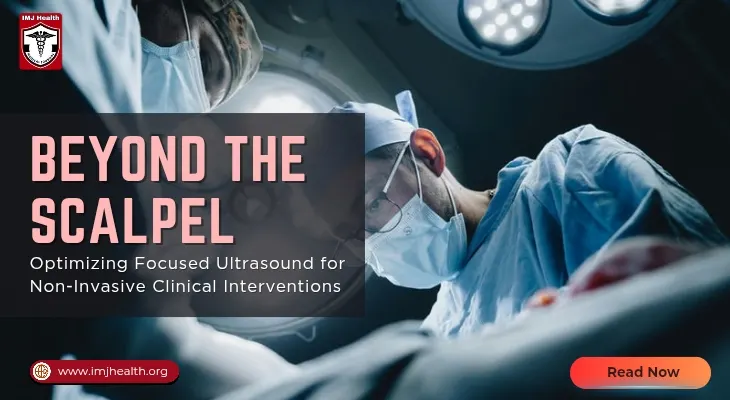
Focused ultrasound is no longer behind the scalpel; it is a literal reconstruction of therapeutic intervention. Its optimization draws on skills from physics, biology, engineering, and clinical understanding. For scholars and researchers, it offers intellectual and social significance. Research on focused ultrasound is bound to transform medicine as the field continues to substitute incisions with precise energy through knowledge and innovation. For those considering doctoral research in this area, PhD in Pharmaceutical Sciences: Scope, Research Areas, Career Impact provides valuable guidance on aligning research trajectories with emerging therapeutic technologies.