Neurological disorders continue to represent one of the greatest healthcare challenges worldwide, affecting millions of individuals across all age groups and contributing significantly to disability, cognitive decline, and mortality. From stroke and epilepsy to neurodegenerative diseases such as Alzheimer's and Parkinson's, the burden of neurological illness continues to rise due to aging populations, lifestyle changes, and increasing diagnostic awareness.
However, neurology in 2026 is undergoing a remarkable transformation. Advances in precision medicine, artificial intelligence (AI), neuroimaging, wearable monitoring systems, minimally invasive interventions, and brain-computer technologies are revolutionizing the prevention, diagnosis, and treatment of neurological disorders. What was once considered irreversible neurological damage is increasingly becoming manageable through earlier detection and targeted intervention. For broader context on AI's role in healthcare, see The Role of Artificial Intelligence in Medical Research.
Among the most notable developments are breakthroughs in stroke prevention, next-generation epilepsy therapies, and innovative approaches to neurodegenerative disease management. Modern neurology is shifting from reactive care toward predictive and preventive treatment models, aiming not only to manage symptoms but also to delay disease progression and improve long-term quality of life.
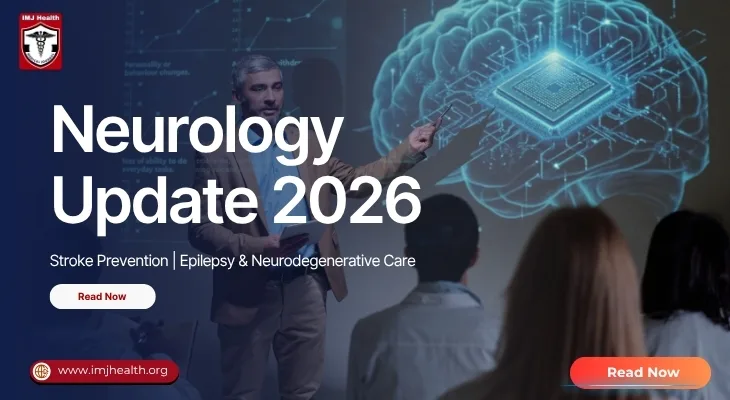
This blog explores the most significant neurology updates in 2026, focusing on new developments in stroke prevention, epilepsy treatment, and neurodegenerative disorders and how emerging technologies are shaping the future of brain health.
Understanding the Growing Burden of Neurological Disorders
Neurological conditions affect the brain, spinal cord, and nervous system, often leading to physical, cognitive, and emotional impairment.
Common neurological disorders include: Stroke, Epilepsy, Alzheimer's disease, Parkinson's disease, Multiple sclerosis, Dementia-related disorders, and Neuromuscular diseases.
Many neurological disorders are chronic and progressive, requiring long-term treatment and monitoring.
Historically, treatment focused primarily on symptom control. In 2026, however, neurology is increasingly focused on prevention, early intervention, and personalized medicine. These approaches align with broader trends in Neuroscience and Brain Health Research.
Stroke Prevention in 2026: Moving Toward Predictive Care
Stroke remains one of the leading causes of death and long-term disability globally. It occurs when blood flow to the brain is interrupted, either due to a blocked artery (ischemic stroke) or bleeding in the brain (hemorrhagic stroke).
The challenge with stroke treatment has always been timing. Since brain cells begin dying within minutes of reduced blood supply, rapid intervention is essential.
Modern stroke prevention strategies are now centered on identifying high-risk individuals before an event occurs.
AI-Powered Stroke Risk Prediction
Artificial intelligence is playing an increasingly important role in stroke prevention.
Advanced predictive systems now analyze: Blood pressure patterns, Heart rhythm abnormalities, Brain imaging data, Lifestyle risk factors, Cholesterol levels, and Electronic health records.
AI algorithms can identify subtle warning patterns and estimate stroke probability with greater accuracy than traditional risk models. This allows clinicians to intervene earlier through lifestyle modification, medication optimization, and preventive therapies.
Better Management of Atrial Fibrillation
One of the most important causes of stroke is atrial fibrillation (AFib), an abnormal heart rhythm that increases blood clot formation.
In 2026, wearable technologies are helping detect silent AFib earlier than ever.
Smart cardiac wearables can: Continuously monitor heart rhythms, Identify irregular heartbeats, Alert users to abnormal patterns, and Share health data with physicians.
Early detection enables faster treatment using blood thinners and rhythm control therapies, significantly lowering stroke risk. This connects to advances discussed in Wearable Health Technology and Remote Patient Monitoring.
Advanced Brain Imaging for Early Detection
Neuroimaging has improved dramatically.
Modern imaging systems can now identify: Small vessel disease, Hidden vascular abnormalities, Silent mini-strokes, and Brain inflammation linked to stroke risk.
Earlier diagnosis helps neurologists personalize preventive strategies before major neurological damage occurs.
Precision Prevention Through Biomarkers
Researchers are increasingly using biomarkers to assess stroke vulnerability.
Emerging biomarkers may help predict: Blood clotting tendencies, Vascular inflammation, Cerebral artery damage, and Neurovascular instability.
This precision approach is helping clinicians move beyond generalized prevention strategies.

Breakthroughs in Stroke Treatment
When strokes occur, faster and more effective treatment remains critical.
Improved Mechanical Thrombectomy
Mechanical thrombectomy has become one of the most important treatments for ischemic stroke.
This minimally invasive procedure removes blood clots from blocked arteries in the brain.
In 2026, thrombectomy technologies offer: Faster clot retrieval, Higher precision navigation, Better outcomes in severe stroke cases, and Expanded treatment windows for select patients.
Improved robotic-assisted navigation systems are increasing procedural accuracy and reducing complications.
Neuroprotective Therapies
Researchers are developing medications that protect brain tissue during stroke.
These neuroprotective agents aim to: Reduce inflammation, Limit neuronal damage, Preserve brain function, and Improve rehabilitation outcomes.
Though still evolving, these therapies could significantly improve stroke recovery rates.
Epilepsy Treatment in 2026: More Personalized and Effective Care
Epilepsy affects millions of people globally and is characterized by recurring seizures caused by abnormal electrical activity in the brain.
Traditional treatment often relied heavily on anti-seizure medications, which sometimes produced inconsistent results or unwanted side effects.
Neurology in 2026 is moving toward highly individualized epilepsy care.
AI-Assisted Seizure Prediction
One of the most exciting developments is seizure prediction technology.
AI-powered systems analyze neurological activity and patient behavior patterns to predict seizure likelihood.
Inputs may include: Brainwave activity, Sleep quality, Stress levels, Heart rate variability, and Movement patterns.
Predictive alerts may allow patients to prepare or seek safety before seizure onset. This represents a major improvement in quality of life for people with unpredictable epilepsy.
Wearable Seizure Detection Devices
Wearables are transforming epilepsy monitoring.
Modern devices can detect: Muscle spasms, Sudden movements, Heart rate changes, and Oxygen fluctuations.
Real-time alerts can notify caregivers and emergency contacts during severe seizures. This technology improves patient safety, especially for children and individuals with uncontrolled epilepsy.
Personalized Anti-Seizure Medication
Precision medicine is reshaping epilepsy treatment.
Genetic testing helps neurologists determine: Which medications are most effective, Drug sensitivity risks, Potential side effects, and Optimal dosing strategies.
This reduces the trial-and-error approach traditionally associated with epilepsy medication.
Responsive Neurostimulation (RNS)
Implantable neurostimulation devices are becoming increasingly sophisticated.
Responsive neurostimulation systems monitor brain activity continuously and deliver electrical stimulation when abnormal seizure signals appear.
Benefits include: Reduced seizure frequency, Fewer medication requirements, Better quality of life, and More targeted therapy.
For patients with drug-resistant epilepsy, neurostimulation offers new hope.
Laser Ablation for Drug-Resistant Epilepsy
Minimally invasive laser therapy is emerging as an effective treatment for certain epilepsy patients.
Laser interstitial thermal therapy (LITT) precisely targets seizure-causing brain tissue while minimizing damage to surrounding areas.
Compared to traditional brain surgery, benefits include: Shorter hospital stays, Faster recovery, Reduced surgical risks, and Improved precision. These minimally invasive approaches parallel innovations discussed in Innovations in Clinical Research.
Neurodegenerative Disorders: New Frontiers in Brain Disease Management
Neurodegenerative disorders remain among the most challenging diseases in medicine.
These conditions gradually damage neurons, leading to progressive decline in memory, movement, and cognitive function.
Major disorders include: Alzheimer's disease, Parkinson's disease, Huntington's disease, and Amyotrophic lateral sclerosis (ALS).
While cures remain limited, 2026 is bringing significant advances in slowing disease progression and improving symptom management.
Alzheimer's Disease: Earlier Detection and Better Monitoring
Alzheimer's disease is increasingly being diagnosed before severe symptoms emerge.
Blood-Based Biomarkers
Traditionally, Alzheimer's diagnosis required expensive imaging or invasive spinal fluid testing.
In 2026, blood-based biomarker tests are becoming more accessible.
These tests can identify: Amyloid protein buildup, Tau protein abnormalities, and Early neurodegeneration markers.
Earlier diagnosis allows patients to begin treatment sooner. For related advances in diagnostic tools, see The Black Box of AI Diagnostics and the Problem of Liability.
Precision Alzheimer's Therapy
Researchers are developing therapies tailored to disease stage and genetics.
Modern treatment focuses on: Slowing cognitive decline, Reducing inflammation, Supporting memory function, and Improving daily independence.
Although not curative, these therapies are extending functional years for many patients.
Parkinson's Disease: Smarter Treatments
Parkinson's disease treatment is also evolving rapidly.
Adaptive Deep Brain Stimulation
Traditional deep brain stimulation delivers continuous electrical signals.
In 2026, adaptive systems adjust stimulation automatically based on real-time brain activity.
Benefits include: Better symptom control, Reduced tremors, Lower medication dependence, and Personalized neurological support.
This technology is improving mobility and independence.
Wearable Movement Monitoring
Wearables can now continuously assess: Tremors, Walking patterns, Muscle rigidity, and Balance problems.
Neurologists use this data to optimize medication timing and therapy.
Brain-Computer Interfaces and Neurotechnology
Perhaps the most futuristic neurology breakthrough is brain-computer interface (BCI) technology.
BCIs enable communication between the brain and external devices.
Potential applications include: Restoring communication in paralysis, Improving rehabilitation after stroke, Assisting mobility disorders, and Supporting cognitive training.
Although still emerging, neurotechnology may redefine neurological care in the coming years. These developments connect to stem cell and regenerative approaches discussed in Stem Cell Therapy in 2025: Latest Breakthroughs and Clinical Trials.
Tele-Neurology and Remote Brain Care
Digital healthcare is improving neurological care accessibility.
Virtual neurology consultations are particularly helpful for: Rural populations, Elderly patients, and Individuals with mobility limitations.
Remote monitoring allows continuous tracking of neurological symptoms and earlier intervention.
This approach is reducing hospital visits and improving long-term management. These digital health strategies are also explored in Digital Therapeutics and Remote Health.
Challenges Facing Neurology Innovation
Despite rapid progress, several barriers remain.
Treatment Costs – Advanced neurological therapies remain expensive and inaccessible in some regions.
Ethical Concerns – Brain monitoring technologies raise questions about privacy and neurological data security.
Limited Curative Options – Many neurodegenerative diseases still lack definitive cures, making long-term symptom management essential.
The Future of Neurology Beyond 2026
Neurology is expected to become increasingly predictive, personalized, and technology-driven.
Future developments may include: AI-powered brain disease prevention, Gene therapies for inherited neurological disorders, Fully personalized neurostimulation devices, Regenerative neuron repair therapies, and Advanced brain-computer rehabilitation systems.
These innovations could dramatically improve patient outcomes and independence.
Neurology updates in 2026 are reshaping how stroke, epilepsy, and neurodegenerative disorders are prevented, diagnosed, and treated. Advances in AI, wearable monitoring, precision medicine, neurostimulation, advanced imaging, and minimally invasive procedures are moving neurological care toward earlier intervention and individualized treatment.
For patients and healthcare providers alike, these innovations offer renewed optimism. While challenges involving accessibility, affordability, and long-term clinical validation remain, the future of neurology is increasingly centered on prevention, personalization, and improved quality of life.
As research continues to unlock the complexities of the human brain, 2026 represents an important milestone in transforming neurological care from symptom management toward proactive brain health preservation.