
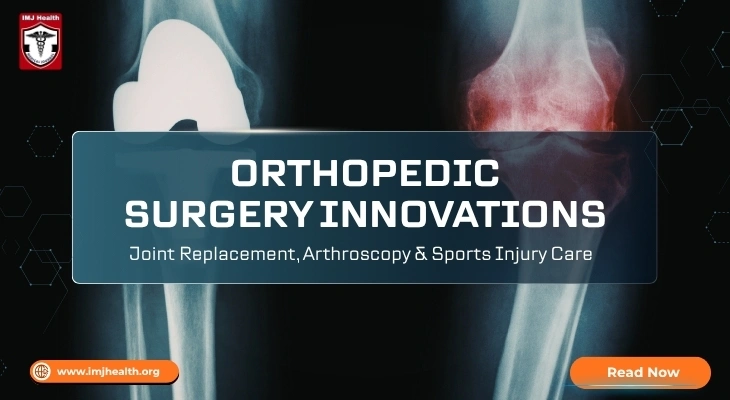
Musculoskeletal disorders remain among the leading causes of disability worldwide, affecting mobility, independence, and overall quality of life. From degenerative joint diseases and traumatic injuries to sports-related conditions, orthopedic problems impact individuals across all age groups. As populations age and participation in recreational and professional sports increases, the demand for advanced orthopedic care continues to grow rapidly.
Fortunately, orthopedic surgery in 2026 is entering a new era of innovation. Technological advancements in robotic-assisted surgery, minimally invasive procedures, smart implants, regenerative medicine, and personalized rehabilitation are transforming how orthopedic conditions are diagnosed, treated, and managed. What once required prolonged hospitalization and lengthy recovery periods is increasingly being replaced by precision-guided procedures that improve outcomes while reducing complications and downtime. For broader context on AI's role in healthcare, see The Role of Artificial Intelligence in Medical Research.
Among the most significant breakthroughs are innovations in joint replacement surgery, arthroscopy, and sports injury management. These developments are helping patients recover faster, experience less pain, and regain mobility with greater confidence.
Traditional orthopedic surgery often focused on repairing structural damage after symptoms became severe. In contrast, modern orthopedic medicine emphasizes early intervention, precision treatment, tissue preservation, and patient-specific care pathways.
This blog explores the most important orthopedic surgery innovations in 2026, focusing on advancements in joint replacement, arthroscopy, and sports injury management and how these breakthroughs are reshaping the future of musculoskeletal healthcare.
Understanding the Growing Need for Orthopedic Innovation
Orthopedic conditions affect bones, joints, ligaments, muscles, tendons, and connective tissues.
Common orthopedic conditions include: Osteoarthritis, Rheumatoid arthritis, Sports injuries, Ligament tears, Joint degeneration, Fractures, Cartilage damage, and Tendon injuries.
These disorders can significantly reduce mobility, independence, and physical performance.
In the past, many orthopedic procedures required extensive surgical exposure, long hospital stays, and prolonged rehabilitation. Today, technological innovation is making surgery more accurate, less invasive, and increasingly personalized. These advances align with broader trends in Innovations in Clinical Research.
Joint Replacement Surgery in 2026: Smarter, More Personalized Care
Joint replacement surgery has advanced significantly over the last decade.
Millions of people suffering from arthritis and joint degeneration now benefit from highly precise surgical techniques that restore movement and reduce chronic pain.
Personalized Joint Replacement Planning
One of the most important developments in 2026 is patient-specific surgical planning.
Modern orthopedic surgeons use: 3D imaging, CT-based joint mapping, AI-assisted anatomical modeling, and Motion analysis systems.
This technology helps create customized surgical strategies tailored to each patient's anatomy.
Rather than relying solely on generalized implant positioning, surgeons can optimize alignment and joint balance for better outcomes.
Benefits include: Improved implant fit, Better mobility restoration, Reduced complications, and Longer implant durability.
Robotic-Assisted Joint Replacement
Robotics is becoming increasingly central to orthopedic surgery.
Robotic-assisted systems help surgeons perform procedures with exceptional precision.
In knee and hip replacement surgeries, robotic guidance improves: Bone preparation accuracy, Implant positioning, Joint alignment, and Surgical consistency.
This minimizes human error and enhances long-term implant performance.
Patients often experience: Reduced postoperative pain, Faster rehabilitation, Better joint function, and Shorter hospital stays.

Smart Implants and Sensor Technology
A major innovation in orthopedic surgery is the rise of smart implants.
Modern implants can now include sensors that monitor: Joint movement, Weight distribution, Implant stability, and Recovery progress.
This data can be shared with healthcare providers to track healing and detect complications earlier.
Smart implants are helping personalize rehabilitation and improve long-term monitoring. These technologies parallel developments in Wearable Health Technology and Remote Patient Monitoring.
Longer-Lasting Implant Materials
Advancements in implant materials are extending implant lifespan.
Modern materials include: Highly durable ceramics, Advanced titanium alloys, and Wear-resistant polymers.
These materials reduce friction and improve implant longevity.
This is especially important for younger patients requiring joint replacement at earlier ages.
Minimally Invasive Arthroscopy in 2026
Arthroscopy remains one of the most valuable orthopedic techniques for diagnosing and treating joint problems.
This minimally invasive procedure uses a small camera and specialized instruments inserted through tiny incisions.
Compared with traditional open surgery, arthroscopy offers substantial benefits.
Advanced Arthroscopic Imaging
Modern arthroscopy systems provide ultra-high-definition visualization.
Surgeons can now observe: Cartilage injuries, Ligament tears, Joint inflammation, Meniscus damage, and Small structural abnormalities.
Improved imaging enables more accurate diagnosis and treatment during the same procedure.
Smaller Incisions, Faster Recovery
Minimally invasive arthroscopy continues to evolve.
Smaller instruments reduce tissue trauma and improve recovery outcomes.
Patients benefit from: Less postoperative pain, Minimal scarring, Reduced infection risk, Faster rehabilitation, and Shorter recovery time.
For many patients, same-day discharge is becoming standard.
Arthroscopy for Joint Preservation
Instead of replacing damaged joints immediately, surgeons increasingly use arthroscopy to preserve natural joint function.
Joint preservation techniques include: Cartilage repair, Ligament reconstruction, Meniscus preservation, and Bone reshaping procedures.
This approach may delay or prevent future joint replacement surgery.
Biologic Enhancements in Arthroscopy
Biological therapies are increasingly integrated into arthroscopic procedures.
Common regenerative approaches include: Platelet-rich plasma (PRP), Stem cell-based therapies, and Growth factor injections.
These treatments aim to accelerate healing and improve tissue regeneration. For related advances, see Stem Cell Therapy in 2025: Latest Breakthroughs and Clinical Trials.
While research continues, early outcomes remain promising for selected orthopedic injuries.
Sports Injury Management in 2026: Faster Recovery and Injury Prevention
Sports medicine is rapidly evolving as athletes demand faster and safer recovery.
From elite professionals to recreational fitness enthusiasts, sports injury care has become increasingly specialized.
AI and Motion Analysis for Injury Prevention
Artificial intelligence is transforming injury prevention.
Advanced movement analysis systems evaluate: Running mechanics, Joint stress patterns, Muscle imbalances, and Biomechanical risks.
Athletes and clinicians can identify injury vulnerabilities before major damage occurs.
This proactive approach is reducing injuries involving: ACL tears, Hamstring injuries, Shoulder instability, and Stress fractures.
Precision Rehabilitation Programs
Rehabilitation is becoming highly individualized.
Physical therapy programs now use: Wearable motion sensors, Digital performance tracking, Strength analytics, and AI-guided recovery plans.
Instead of generalized rehabilitation schedules, therapy adjusts according to patient progress.
This improves recovery speed while lowering reinjury risk.
Regenerative Medicine for Sports Injuries
Regenerative therapies are gaining significant attention.
Orthopedic specialists increasingly use biologic approaches to support tissue healing.
These include: Platelet-rich plasma (PRP) injections, Stem cell therapy, and Growth factor treatments.
Potential applications include: Tendon injuries, Ligament tears, Muscle damage, and Cartilage injuries.
Although long-term evidence continues to evolve, these therapies are increasingly incorporated into sports medicine.
ACL Reconstruction Advancements
Anterior cruciate ligament (ACL) injuries remain among the most common sports injuries.
In 2026, ACL surgery has become more precise through: Better graft materials, Robotic-assisted positioning, Tissue-preserving techniques, and Enhanced rehabilitation strategies.
Athletes now experience improved recovery timelines and lower reinjury rates.
Wearable Recovery Technologies
Wearable devices are becoming standard in sports medicine.
These tools monitor: Joint movement, Muscle fatigue, Recovery metrics, and Training intensity.
Athletes and clinicians can make data-driven decisions to optimize performance and recovery. These digital health approaches are also explored in Digital Therapeutics and Remote Health.
Robotics and Navigation in Orthopedic Surgery
Computer-assisted navigation is improving surgical precision.
Modern systems help surgeons: Plan procedures more accurately, Improve implant positioning, Reduce alignment errors, and Enhance procedural consistency.
This technology is particularly beneficial in: Knee replacement, Hip replacement, Spine surgery, and Complex trauma reconstruction.
Robotics is expected to become increasingly widespread in orthopedic practice.
Outpatient Orthopedic Surgery Growth
Many orthopedic procedures now require shorter hospital stays.
Advances in: Pain management, Minimally invasive techniques, and Faster rehabilitation protocols are making same-day orthopedic surgery increasingly common.
Patients benefit from: Lower healthcare costs, Reduced infection risks, Faster home recovery, and Greater convenience.
Challenges Facing Orthopedic Innovation
Despite major progress, challenges remain.
High Costs – Advanced robotics and smart implant technologies remain expensive. Wider accessibility is still developing.
Rehabilitation Compliance – Surgical success often depends on consistent rehabilitation. Patient adherence remains essential.
Long-Term Clinical Data – Some emerging biologic therapies still require more evidence regarding long-term outcomes. Balancing innovation with proven effectiveness remains important. These challenges are part of broader discussions in Top 10 Public Health Challenges in 2025.
The Future of Orthopedic Surgery Beyond 2026
Orthopedic medicine is expected to become increasingly predictive, regenerative, and technology-driven.
Future innovations may include: Fully personalized implants, Advanced tissue regeneration, AI-powered surgical planning, Smart rehabilitation ecosystems, and Bioprinted cartilage and bone replacement.
Researchers are moving toward treatments that restore tissue rather than simply replacing damaged structures.
Conclusion
Orthopedic surgery innovations in 2026 are transforming how joint disorders, arthroscopic conditions, and sports injuries are treated. Advances in robotic-assisted surgery, smart implants, minimally invasive arthroscopy, regenerative medicine, and personalized rehabilitation are helping patients recover faster and regain mobility more effectively.
For both aging populations and physically active individuals, these breakthroughs offer meaningful improvements in pain relief, performance, and long-term joint health. While challenges related to cost, accessibility, and long-term validation remain, the future of orthopedic care is increasingly centered on precision, preservation, and patient-specific treatment.
As technology and biological science continue to evolve, orthopedic medicine is shifting beyond traditional repair toward smarter, more personalized, and increasingly regenerative approaches to musculoskeletal health. For those considering doctoral research in this area, Top 10 Pharmaceutical Research Topics for PhD offers guidance on selecting impactful research directions.