Pharmacology remains one of the most important pillars of modern medicine, shaping how diseases are treated, prevented, and managed across nearly every healthcare specialty. From life-saving medications for chronic illnesses to advanced therapies for complex diseases, pharmacology plays a central role in improving patient outcomes and extending life expectancy.
As healthcare challenges continue evolving, the science of medicines is undergoing significant transformation. Traditional drug discovery often required years of research, expensive development processes, and extensive clinical testing before reaching patients. In 2026, however, advances in artificial intelligence (AI), biotechnology, precision medicine, genomics, and digital clinical research are accelerating pharmaceutical innovation and changing how medicines are developed and evaluated. For broader context on AI's role in healthcare, see The Role of Artificial Intelligence in Medical Research.
At the same time, growing concerns surrounding adverse drug reactions, medication safety, and treatment personalization are increasing the importance of pharmacovigilance and evidence-based prescribing. Modern healthcare increasingly focuses not only on developing effective medicines but also on improving safety, reducing side effects, and ensuring treatments are tailored to individual patient needs.
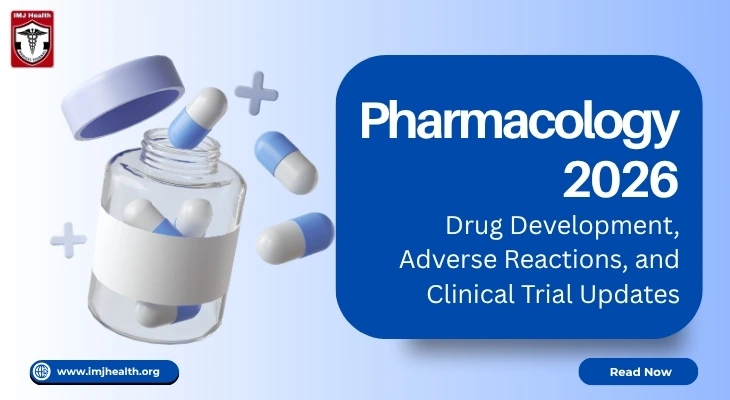
Among the most significant developments in pharmacology are innovations in drug development, better understanding of adverse drug reactions, and modern clinical trial strategies. These advancements are helping healthcare providers bring safer, more effective medicines to patients faster than ever before.
This blog explores key developments in pharmacology in 2026, focusing on drug development, adverse reactions, and clinical trial updates and how these changes are transforming the future of medicine.
Understanding Pharmacology
Pharmacology is the branch of medicine and science focused on how drugs interact with the body.
It involves studying: Drug mechanisms, Therapeutic effects, Side effects, Dosage optimization, Drug interactions, and Medication safety.
Pharmacology supports healthcare through: Drug discovery, Treatment development, Medication monitoring, Disease prevention, and Personalized medicine.
Modern pharmacology increasingly combines biology, chemistry, genetics, and digital technology.
Drug Development in 2026
Drug development remains a complex process, but innovation is making it faster and more targeted.
Traditional pharmaceutical development often required over a decade of research.
Today, advanced technologies are improving efficiency and success rates.
AI in Drug Discovery
Artificial intelligence is transforming pharmaceutical research.
AI systems help researchers: Identify drug candidates, Analyze disease targets, Predict treatment outcomes, and Reduce research timelines.
Machine learning can process large biological datasets far faster than traditional methods.
This helps accelerate early-stage discovery. For insights into AI diagnostics, see The Black Box of AI Diagnostics and the Problem of Liability.

Precision Medicine and Personalized Drugs
Drug development is becoming increasingly personalized.
Researchers now consider: Genetic differences, Biomarker profiles, Disease subtypes, and Individual treatment response.
This approach helps improve medication effectiveness while reducing unwanted side effects.
Precision medicine is especially important in: Cancer care, Rare diseases, Autoimmune disorders, and Neurological conditions.
Biologics and Advanced Therapies
Biologic medicines continue expanding rapidly.
Unlike traditional drugs, biologics are developed from living organisms.
Examples include: Monoclonal antibodies, Cell-based therapies, Gene therapies, and Immune-targeted treatments.
These therapies are improving outcomes for previously difficult-to-treat conditions. For related advances, see What's Next in Cancer Treatment: Advances Beyond Immunotherapy.
Faster Drug Repurposing
Drug repurposing is becoming increasingly important.
Researchers evaluate existing medicines for new uses.
Benefits include: Faster approval timelines, Reduced development costs, and Better safety understanding.
Repurposed drugs may offer quicker treatment solutions during health emergencies.
Adverse Drug Reactions in 2026
Medication safety remains a major pharmacology priority.
Adverse drug reactions (ADRs) occur when medicines cause harmful or unintended effects.
These reactions may range from mild side effects to serious complications.
Common causes include: Incorrect dosage, Drug interactions, Allergic responses, Genetic differences, and Multiple medication use.
Older adults and individuals with chronic illnesses may face greater risks.
Pharmacovigilance Improvements
Pharmacovigilance refers to monitoring medicine safety after approval.
Modern systems increasingly track: Side-effect reports, Medication complications, Long-term treatment risks, and Population health trends.
Real-world data helps improve medication safety over time.
AI in Drug Safety Monitoring
Artificial intelligence is improving adverse reaction detection.
AI systems analyze: Electronic medical records, Prescription patterns, Patient-reported symptoms, and Healthcare databases.
This helps identify safety concerns earlier.
Pharmacogenomics and Drug Response
Genetic testing is helping personalize medication selection.
Pharmacogenomics studies how genes affect treatment response.
Benefits include: Better medication matching, Reduced side effects, Improved treatment outcomes, and Safer prescribing decisions.
Doctors increasingly use genetic information to guide medication choices.
Polypharmacy and Drug Interactions
Drug interaction risks continue increasing due to polypharmacy.
Patients with multiple conditions may take several medications simultaneously.
Modern prescribing tools help identify: Dangerous combinations, Dosage conflicts, and High-risk interactions.
Digital prescribing systems are reducing medication-related harm. These approaches connect to Digital Therapeutics and Remote Health in medication management.
Clinical Trial Updates in 2026
Clinical trials remain essential for evaluating medicine safety and effectiveness.
However, trial design is changing significantly.
Decentralized Clinical Trials
Remote or decentralized trials are becoming more common.
Participants may now join studies through: Telemedicine consultations, Digital monitoring devices, Home testing kits, and Virtual follow-ups.
This improves accessibility and participation diversity.
AI-Powered Clinical Research
AI is helping improve clinical trial efficiency.
Researchers use AI to: Identify suitable participants, Predict trial outcomes, Analyze patient responses, and Improve study design.
This may reduce delays and improve research quality.
Precision Clinical Trials
Clinical trials increasingly target specific patient populations.
Selection may depend on: Genetic markers, Biomarkers, Disease subtype, and Personalized risk factors.
Precision trials help improve treatment success rates.
Real-World Evidence in Drug Evaluation
Researchers increasingly use real-world patient data after drug approval.
Sources include: Electronic health records, Patient registries, and Healthcare databases.
This helps evaluate long-term safety and effectiveness.
Regulatory Changes in Pharmacology
Healthcare regulators increasingly focus on: Faster approvals for critical therapies, Stronger safety monitoring, Transparent clinical data, and Personalized treatment standards.
Balancing innovation and patient safety remains essential.
Challenges Facing Pharmacology
Despite major advances, challenges remain.
Rising Drug Costs – Advanced medicines may remain expensive. Improving affordability continues to be important. These concerns are part of broader discussions in Top 10 Public Health Challenges in 2025.
Drug Resistance – Antibiotic and antiviral resistance complicate treatment development.
Clinical Trial Complexity – Recruiting participants and ensuring diversity remain ongoing concerns.
The Future of Pharmacology Beyond 2026
The future of pharmacology is becoming increasingly personalized, predictive, and technology-driven.
Expected developments include: AI-designed medicines, Gene-targeted therapies, Personalized prescribing, Smarter medication monitoring, and Faster clinical research systems.
Researchers increasingly aim to develop safer medicines with fewer side effects. For those considering doctoral research in this area, Top 10 Pharmaceutical Research Topics for PhD offers guidance on selecting impactful research directions.
Pharmacology in 2026 is rapidly evolving through advances in drug development, adverse reaction monitoring, and clinical trial innovation. Technologies such as AI-assisted drug discovery, pharmacogenomics, biologic therapies, decentralized clinical trials, and precision medicine are improving how medicines are developed and prescribed.
These breakthroughs are helping healthcare providers deliver safer, more effective, and more personalized treatments while improving medication safety and reducing adverse reactions. Although challenges involving affordability, drug resistance, and research complexity remain, the future of pharmacology is increasingly focused on precision, speed, and patient-centered care.
As science and digital innovation continue advancing, pharmacology will remain central to medical progress, helping shape a future where treatments are safer, smarter, and increasingly tailored to individual patient needs.
Continue Exploring Our Blog
- The Role of Artificial Intelligence in Medical Research
- Digital Therapeutics and Remote Health: The Rise of Software-Driven Treatments
- What's Next in Cancer Treatment: Advances Beyond Immunotherapy
- Top 10 Public Health Challenges in 2025
- Innovations in Clinical Research: From Medicines to Surgical Methods