Need for Antimicrobial and Biofilm Resistant Coatings
The rise in the use of medical devices in all clinical settings has brought about a massive change in modern medicine but also increased the worldwide burden of infections that are related to device use. Implants used in orthopedics, catheters, prosthetic supports, heart valves, vascular grafts, dental implants, and other implants used as life support systems are all substrates for colonization by opportunistic pathogens. The percentage of nosocomial infections due to device-associated infection is quite high globally. Clinical microbiology and biomedical engineering research studies continually indicate that these infections begin with microbial adhesion and subsequent biofilm maturation that forms an inhibitory framework which curbs vulnerability to immune treatments and antimicrobial therapy. For a deeper understanding of how biofilm research intersects with broader medical challenges, see our guide on Advancements in Microbiome Research.
Biofilms have been studied widely by Donlan, Costerton, and others who explained that their structure is very complex and their metabolism heterogeneous. After they are established, biofilms can resist a thousand times greater concentration of antibiotics than is necessary to kill planktonic cells. Persistent tissue damage caused by inflammation also includes the existence of extracellular polymeric materials that worsen and hinder healing and, in extreme cases, generalize infection. According to biomaterials engineering textbooks, failure of implanted devices is not usually associated with mechanical failure but rather with complications due to infection. This challenge is closely related to the growing crisis of antibiotic resistance and new treatment approaches which affects device-related infection management.
The necessity of a coating capable of preventing bacterial adhesion, preventing the further development of biofilm, or destroying microbes at the surface is key to the next generation of medical technologies. Antimicrobial surfaces and biofilm-resistant materials represent a significant interdisciplinary area of application involving materials science, microbiology, pharmacology, surface chemistry, nanotechnology, and clinical engineering. The underlying science and design principles, material classes, performance characterization, biodegradation profiles, regulatory constraints, and the future of antimicrobial and biofilm-resistant coatings are discussed in this blog.
Understanding the Biology of Microbial Adhesion and Biofilm Formation
Stages of Microbial Adhesion on Medical Surfaces
Microbial adhesion is a complex process that requires a combination of factors depending on surface chemistry, hydrophobicity, surface roughness, ions in the environment, protein conditioning films, and individual ligand-receptor interactions. The classic biofilm literature identifies two key stages of the process.
Initial reversible adhesion – During this stage, microorganisms attach to the material surface by either Brownian motion, chemotaxis, or gravitation. The earliest contact events are controlled by van der Waals forces, electrostatic interactions, hydrophobic forces, and steric hindrance. Surfaces with rough or topographical features impact cell retention. Surface science studies have demonstrated that even nanoscale asperities can have a considerable effect on adhesion probability. Physiological fluids often contain proteins that will adsorb rapidly onto the material, generating a conditioning film which changes the surface properties.
Irreversible adhesion – Microorganisms move to the irreversible attachment period by using adhesins, fimbriae, pili, or exopolysaccharide secretion. After attaching, the cells rapidly cause changes in gene expression. Research conducted by O'Toole and associates has demonstrated that surface sensing leads to intracellular signaling pathways including cyclic di-GMP regulation, leading to the up-regulation of biofilm-related genes.
Biofilm Development and Maturation
The biofilm lifecycle involves well-defined phases, which are proven with the help of microscopy research and genome analysis.
Microcolony formation – Once irreversible attachment occurs, microbial cells start dividing and creating microcolonies. The local environment is made more organized when extracellular polymeric substances become concentrated. Polysaccharides, extracellular DNA, lipids, and proteins make up EPS. Microbiology textbooks point out that EPS is responsible for nutrient retention, water channel formation, mechanical robustness, and antimicrobial tolerance.
Maturation and architectural complexity – Mature biofilms have mushroom-like structures with water channels that promote nutrient distribution. The biofilm grows heterogeneous microenvironments including oxygen gradients and metabolically differentiated cellular subpopulations. Through these variations, persister cells arise that show high levels of antibiotic tolerance.
Dispersion and dissemination – Active dispersion is caused by environmental variations such as nutrient limitation or shear stress, mediated by enzymatic matrix degradation. Dispersed cells are capable of colonizing new surfaces and triggering new biofilms. These scattered cells persist and lead to repeated infections of medical equipment.
Clinical Impact of Biofilm Associated Infections
Infection of medical devices has been a major clinical issue since it may necessitate total removal followed by a long course of antimicrobial treatment. Catheter-associated urinary tract infections are among the most common hospital-acquired infections. Ventilator-associated pneumonia and central line-associated bloodstream infections also represent major burdens. Bone necrosis and poor tissue integration are some of the problems that make orthopedic implant infections very difficult to treat. The One Health perspective on pharmaceutical waste and environmental safety also relates to how antimicrobial residues from coatings may impact broader ecosystems.
Many clinical microbiology sources explain how biofilm-related infections show enhanced resistance to beta-lactams, aminoglycosides, fluoroquinolones, and host immune responses. Biofilm-induced chronic inflammation may result in delayed tissue fibrosis, poor healing, and the formation of chronic wounds.
In light of these challenges, scientists in biomedical engineering, materials science, and clinical microbiology are working to find new coating technologies that can help prevent biofilm formation or kill adherent microbes.
Principles of Antimicrobial and Biofilm Resistant Coating Design
Understanding Surface Chemistry and Physical Characteristics
Surface chemistry is one of the most significant factors in microbial adhesion. Hydrophobic surfaces tend to increase adhesion of hydrophobic microbes, whereas hydrophilic surfaces can inhibit non-specific interactions. Surface roughness also plays an important role. Smooth surfaces minimize adhesion sites, whereas overly rough or porous materials entrap microorganisms in microstructures.
Surface energy, charge density, wettability, metal oxide chemistry, and polymers all factor into microbial behavior at interfaces. For illustration, studies have demonstrated that positively charged surfaces can attract negatively charged bacterial membranes and also destabilize them when cationic antimicrobial molecules are included.
Elasticity and shear resistance are other mechanical properties that influence biofilm development. Weaker polymers can easily deform and increase microbial retention, whereas stiffer materials can decrease surface indentation.

Design Objectives for Effective Coatings
An effective antimicrobial coating should fulfill a number of requirements developed within biomaterial engineering systems:
- Use surface chemistry or surface topography to prevent or reduce microbial adhesion
- Kill or suppress microorganisms by releasing or contacting active agents
- Inhibit biofilm maturation by impeding EPS production or quorum sensing
- Maintain biocompatibility to prevent cytotoxicity to host cells
- Provide mechanical durability in a physiological environment
- Show compatibility with sterilizing procedures like autoclaving or gamma-irradiation
- Exhibit regulated degradation or prolonged activity according to clinical needs
- Resist exposure to physiological fluids without leaching excessive toxic substances
These demands highlight the difficulty in developing antimicrobial coating designs that are simultaneously antimicrobial, long-lasting, and safe.
Classes of Antimicrobial and Biofilm Resistant Coatings
Metal Based Antimicrobial Coatings
Silver coatings – Silver has been a widely used antimicrobial agent. Its action occurs through reaction with thiol groups in proteins, disruption of membrane potential, and formation of reactive oxygen species. Release coatings using silver ions and silver nanoparticle composites have attracted much attention. Metallurgical engineering studies indicate that nanoscale silver has greater surface area and antimicrobial activity. Catheters, wound dressings, and dental implants receive silver coatings. Potential pitfalls include cytotoxicity at high concentrations and development of resistance. In severe cases, clinical incidence is not common, but long-term exposure may result in argyria.
Copper coatings – The strong antimicrobial effect of copper is based on oxidative stress that interferes with membrane integrity and inactivates proteins. Microbiological studies have established that copper surfaces reduce microbial load significantly within minutes. Copper oxide nanoparticles have been explored in polymer coatings for orthopedic and cardiac implants.
Zinc oxide and titanium dioxide coatings – These materials have antimicrobial effects, especially under ultraviolet light where they produce reactive oxygen species. Antimicrobial effects are improved by adding silver or copper to these oxides. They are commonly applied in dental implants and photocatalytic coatings.
Polymer Based Antimicrobial Coatings
Hydrophilic polymer coatings – Hydrophilic polymers like polyethylene glycol inhibit protein adsorption and inhibit early microbial adhesion. PEGylation forms a water shell that sterically hinders cell adhesion by repelling cells. These coatings, however, do not actively kill microbes and may degrade over time.
Cationic polymer coatings – Polyethyleneimines and polymers with quaternary ammonium groups affect microbial membranes by disrupting them due to their positive charge. They exhibit contact killing and have found application in catheters and endotracheal tubes. The challenge lies in balancing antimicrobial strength with host cell compatibility. Research into drug delivery systems innovations provides complementary insights into polymer-based therapeutic coatings.
Biopolymer coatings – Chitosan receives much research attention due to its natural antimicrobial effects from its cationic nature. It is biodegradable and biocompatible. Alginates and cellulose derivatives are also used for controlled release of antimicrobial agents.
Antibiotic Loaded and Drug Releasing Coatings
Controlled release coatings containing antibiotics such as rifampicin, gentamicin, vancomycin, minocycline, and chlorhexidine can inhibit early infection by providing prolonged antimicrobial levels at the device interface. Biodegradable polymers, sol-gel coatings, and microencapsulation strategies are typically employed, often through layer-by-layer assembly.
The second major problem is potential resistance development. Long-term exposure to antibiotics can select for resistant strains. Therefore, research has placed more emphasis on combination drugs and alternative agents. The challenge of resistance parallels concerns in immunotherapy research challenges and opportunities where adaptive resistance mechanisms remain a key obstacle.
Nanomaterial Based Coatings
Nanotechnology has brought significant change to antimicrobial coating design. Nanoparticles have distinct characteristics because of their shape, size, and surface-to-volume ratio.
Silver nanoparticles – These have been incorporated into polymer films, hydrogels, and sol-gel matrices. Their small size allows interaction with microbial membranes.
Graphene-based coatings – Graphene oxide interferes with bacterial membranes by cutting them through mechanical processes and oxidative stress. It also prevents biofilm formation by blocking microbial attachment.
Carbon nanotube coatings – Antimicrobial activity occurs through membrane piercing. However, cytotoxicity issues restrict clinical use.
Nano-hydroxyapatite composites – For orthopedic implants, antimicrobial ions such as silver or zinc can be loaded into nano-hydroxyapatite composites to achieve dual osteoconductive and antimicrobial functions.
Peptide Based and Protein Inspired Coatings
Antimicrobial peptides such as LL-37, magainins, cecropins, and defensins have been investigated for surface immobilization. These peptides interfere with bacterial membranes and selectively affect microorganisms without harming healthy cells. Covalent attachment of peptides provides long-term activity without releasing cytotoxic agents.
Enzyme-based coatings that break down biofilm matrix components – including DNase, lytic enzymes, and proteases – are also being developed. These inhibit biofilm maturation and target EPS.
Anti Adhesive Surface Engineering Strategies
Surface patterning – Micro-engineering and nanostructuring of surfaces resembling lotus leaves or shark skin lowers microbial adhesion. Sharklet patterning uses biomimetic topography to thwart bacterial settlement. Studies indicate that micropillars and ridges physically obstruct microbial landing and propagation.
Superhydrophobic coatings – These surfaces have high water contact angles and low surface free energy. They reduce microbial adhesion because contact time between cells and the surface is minimized. Hierarchical roughness creates these properties.
Slippery liquid-infused porous surfaces – Inspired by pitcher plants, these coatings trap lubricating fluids in microstructured substrates. They form a slick molecular layer that avoids microbial adhesion and biofilm development. These are under medical study for tubing and catheters.
Advanced Multifunctional Coatings
Combination antimicrobial and drug delivery coatings – Modern literature highlights multifunctional coatings that integrate anti-adhesive qualities, release properties, and mechanical stability. Layer-by-layer films enable detailed control of drug loading kinetics, mechanical properties, and surface charge. Polylactic acid, polycaprolactone, and other biodegradable polymers allow prolonged antimicrobial release. Other systems combine growth factors to promote tissue integration.
Stimuli-responsive antimicrobial coatings – These intelligent materials can release antimicrobials based on stimuli like pH change, temperature, mechanical stress, or microbial enzyme secretion. For example, pH-responsive hydrogels release antibiotics into acidic microenvironments characteristic of infection sites. Enzyme-responsive surfaces disintegrate in the presence of microbial lipases or proteases. Thermoresponsive polymers like poly(N-isopropylacrylamide) change conformation with temperature and can regulate drug release.
Quorum sensing inhibiting coatings – Current biofilm literature indicates the central role of quorum sensing in regulating EPS synthesis and virulence. Materials that release quorum-quenching molecules like furanones or enzymes like lactonases interfere with these communication pathways. These surfaces prevent biofilm development and maturation without directly killing microbes, thus suppressing resistance development.
Antimicrobial photodynamic and photothermal coatings – Photodynamic therapy involves photosensitizers that, upon exposure to specific light wavelengths, produce reactive oxygen species. Surfaces incorporating porphyrins, phthalocyanines, or Rose Bengal can eliminate surface-bound microbes under controlled light. Infrared light is absorbed by photothermal coatings made with gold nanorods or graphene and converted to heat that kills microbes. These strategies are under development for external devices and wound healing.
Methods of Fabrication for Antimicrobial Coatings
Plasma Based Coating Techniques – Plasma-enhanced chemical vapor deposition and plasma spraying are commonly used to create thin antimicrobial films. Plasma treatment also alters surface energy and enhances adhesion. These methods enable homogeneous film deposition and effective loading of metal ions or antimicrobial agents.
Sol Gel Processing – Sol-gel coatings offer excellent control over porosity, mechanical strength, and drug loading. Silica, titania, or zinc oxide-based metal oxide coatings typically utilize sol-gel chemistry. Adding antibiotics or nanoparticles to sol-gels produces strong antimicrobial films.
Layer by Layer Assembly – This process relies on electrostatic interactions between oppositely charged polymers, polyelectrolytes, peptides, or nanoparticles. It enables precise regulation of thickness, drug loading, and surface charge. Layer-by-layer systems coat a wide range of catheters, orthopedic implants, and stents. This technique shares principles with advanced biomaterial design discussed in 3D printing in medicine where layer-wise construction enables complex geometries.
Electrospinning – Antimicrobial nanoparticles, drugs, or peptides can be incorporated into polymer matrices using electrospun nanofibers. These have high surface area which facilitates prolonged release. Implants may be covered by electrospun mats, or mats may be incorporated onto device surfaces.
Dip Coating and Spray Coating – These are simple fabrication processes for large-scale coating of catheters or tubing. Drug-loaded polymers, silver nanoparticles, or hydrophilic polymers can be deposited using these techniques. Uniformity and thickness are determined by withdrawal velocity and solution viscosity.
Chemical Grafting and Surface Functionalization – Functionalization of surfaces using silane coupling agents, polymer grafting, or peptide immobilization with covalent linkage to the surface increases coating permanence. Surface-initiated polymerization permits antimicrobial polymers to be grafted directly to device surfaces.
Characterization Techniques for Coating Evaluation
Surface Morphology and Topography Analysis
Surface roughness and microstructural features are characterized using scanning electron microscopy, atomic force microscopy, and 3D profilometry. These analyses ascertain uniformity of topographical features and detect potential defects.
Chemical Composition Analysis
Chemical identity and bonding states of coating materials are confirmed by Fourier transform infrared spectroscopy, X-ray photoelectron spectroscopy, Raman spectroscopy, and energy dispersive X-ray analysis. These methods confirm effective integration of antimicrobial agents.
Antimicrobial Activity Testing
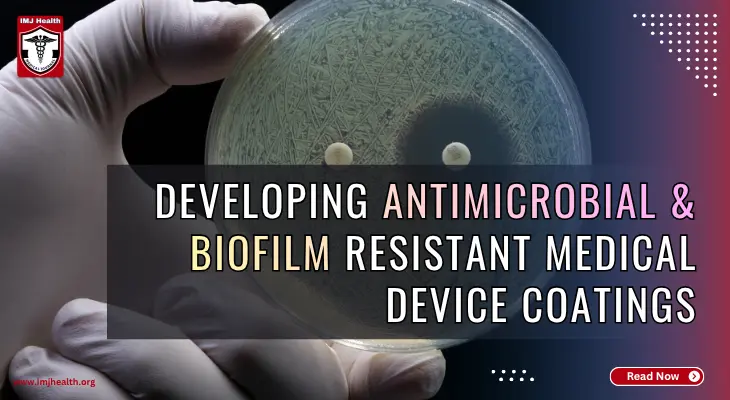
Standardized microbiological tests include colony forming unit counting, zone of inhibition assays, biofilm formation assays, live/dead cell staining using confocal microscopy, and time-kill studies. Advanced approaches include metabolic activity assays using resazurin, microcalorimetry, and fluorescence reporter strains.
Biofilm Inhibition and Disruption Studies
Flow cell systems and rotating disk reactors simulate physiological shear forces using microfluidic devices. Such systems enable real-time tracking of biofilm structure and dispersal.
Mechanical and Durability Testing
Tensile testing, nanoindentation, and scratch tests evaluate coating wear resistance and mechanical stability. Devices must resist mechanical forces during insertion, removal, and physiological function.
Biocompatibility and Cytotoxicity Assessments
Material interactions with host cells are assessed through cell viability assays, hemocompatibility tests, protein adsorption studies, inflammatory response assays, and animal experiments evaluating long-term tissue integration, host response, and foreign body reaction.
Biodegradation Profiles and Release Kinetics
Understanding Biodegradation Mechanisms
Biodegradable antimicrobial surfaces rely on controlled degeneration of polymer structures or dissolution of metal ionic compounds. Primary mechanisms include hydrolytic degradation, enzymatic cleavage, and oxidative reactions. Polymer molecular weight, crystallinity, and crosslink density affect degradation rates.
Drug Release Kinetics
Release models include zero-order, first-order, Higuchi, and Korsmeyer-Peppas. Controlled release avoids burst effects and provides prolonged antimicrobial activity. Nanoparticles and layer-by-layer designs can tune release kinetics.
Regulatory Considerations and Clinical Translation
Biocompatibility Requirements – Regulatory agencies mandate safe interaction between device coatings and host tissues. Standards including ISO 10993 provide requirements for cytotoxicity, sensitization, irritation, systemic toxicity, and implantation studies.
Safety and Toxicity Considerations – Silver, copper, and nanoparticle-based coatings must be evaluated for systemic accumulation, DNA damage, oxidative stress, and inflammation. Pharmacokinetic examination and resistance development assessment are necessary for drug-loaded coatings.
Manufacturing and Quality Control Requirements – Clinical translation requires scalability, reproducibility, and sterilizability. Manufacturing processes should maintain chemical consistency and coating stability.
Regulatory Approval Pathways – Coatings are commonly analyzed as combination products, which complicates approval. Devices using new technologies require clinical trial testing. Understanding regulatory pathways for medical innovations is also discussed in our article on innovations in clinical research.
Challenges in Developing Antimicrobial and Biofilm Resistant Coatings
Resistance Development – Excessive antibiotic use promotes resistance. Resistance to metal ions, though rarer, can also occur. Current research focuses on mechanisms that reduce resistance, such as quorum sensing inhibition or mechanical anti-adhesion.
Balancing Antimicrobial Activity with Biocompatibility – Strong antimicrobials can harm host cells. Selective toxicity must be achieved.
Long Term Stability and Durability – Surfaces must resist sterilization and remain stable long-term in vivo. Performance may degrade or delaminate.
Complexity of Biofilms in Physiological Environments – Biofilms exhibit metabolic variation and dynamic species diversity. Models must replicate actual clinical scenarios.
Future Directions in Antimicrobial and Biofilm Resistant Coating Research
Emerging Nanotechnology Strategies – Next-generation nanocoatings combine multiple actions including enzyme degradation, drug delivery, and mechanical disruption. Nanostructured surfaces that imitate natural biological textures are undergoing refinement.
Peptide and Protein Mimetic Coatings – Synthetic peptide mimetics offer durable and powerful antimicrobial activity. Self-assembling peptides and multifunctional biomolecular coatings are under study.
CRISPR Based Antimicrobial Delivery – CRISPR-Cas systems are being developed to eliminate bacteria via gene editing. Nanoparticles that release CRISPR components represent a new coating direction.
Bacteriophage Immobilized Coatings – Phages that target pathogenic bacteria can be attached to surfaces. They selectively kill without damaging beneficial microorganisms.
Bioinspired and Biomimetic Surfaces – Cicada wing surface mechanics, shark skin patterns, and lotus effect surface textures have inspired anti-adhesive approaches.
Integration with Smart Sensing Technologies – Future coatings may incorporate sensors for biomarkers, release therapeutics on demand, and communicate wirelessly with external monitors.
These forward-looking approaches are part of broader trends in top trending research topics in medical science that are shaping the future of healthcare technology.
The development of antimicrobial and biofilm-resistant surfaces for medical equipment is an interdisciplinary challenge that is also urgently required in clinical settings. From metal ion coatings to peptide-based surfaces, from anti-adhesive microtopographical coatings to multifunctional nanocoatings, the field continues to evolve rapidly. Innovations in surface engineering, microbiology, nanotechnology, pharmacology, and biomedical materials science make it possible to develop new technologies that can potentially change infection control. For scientists and learners in life sciences, engineering, and clinical sciences, this field presents a fertile area for scientific exploration and translational opportunity. As the global medical device market grows, the value of safe, effective, and long-lasting antimicrobial coatings will continue to increase.