Mechanobiology of Disease Progression: An Interdisciplinary Research Perspective
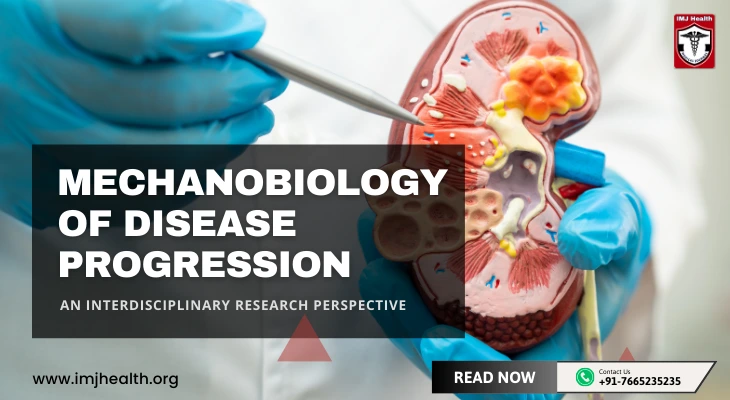
Mechanobiology provides critical insights into how mechanical forces influence cellular behavior and disease progression. This interdisciplinary review integrates biology, physics, and engineering to examine mechanotransduction pathways, tissue mechanics, and their roles in cancer, cardiovascular, and degenerative diseases, highlighting emerging tools and translational research opportunities.
Mechanobiology is an interdisciplinary field investigating how physical forces and the mechanical properties of cells, tissues, and extracellular matrices regulate biological processes. It integrates cell and molecular biology, materials science, biophysics, and biomedical engineering. Disease development is now understood not only through genetic and biochemical pathways but also through the mechanical microenvironment in which cells exist. Tissue stiffness, fluid shear stress, compressive loads, tensile strain, and mechanotransduction signaling networks critically influence disease initiation and progression.
Over the past two decades, mechanobiology has transformed our understanding of pathophysiology. Foundational texts such as Cellular Biophysics by Philip Nelson and Molecular Biology of the Cell by Alberts et al. detail how mechanical stimuli control cell shape, polarity, proliferation, and death. Research by pioneers like Donald Ingber, Dennis Discher, Valerie Weaver, and Kris Dahl demonstrates that changes in tissue mechanics often precede detectable molecular biomarkers, shifting disease biology from a purely biochemical to a physical framework.
This blog examines the mechanobiological basis of major diseases including cancer, cardiovascular disorders, fibrosis, musculoskeletal degeneration, and neurological conditions, providing conceptual and research-oriented analysis for advanced students and scholars.
1. Foundations of Cellular and Tissue Mechanics
Cellular Architecture as a Mechanical System
Cells are not fluid-filled sacs but structurally organized mechanical entities. The cytoskeleton—composed of actin microfilaments (resist tension), microtubules (resist compression), and intermediate filaments (provide resilience)—forms an integrated tensegrity network. This concept, advanced by Donald Ingber, describes how cells maintain stability through balanced tension and compression forces.
Cells connect mechanically to their extracellular matrix (ECM) via focal adhesions and integrins, transmitting external forces inward to the nucleus, where they influence chromatin organization and transcriptional activity—a process known as mechanotransduction.
Key Mechanobiological Processes:
- Mechanosensing: Via receptors including integrins, cadherins, and mechanosensitive ion channels (e.g., Piezo1, TRPV4).
- Mechanotransmission: Through the cytoskeleton and nuclear envelope.
- Mechanotransduction: Signaling via YAP/TAZ, Rho GTPases, MAPK, and Wnt pathways.
Extracellular Matrix Mechanics as a Disease Modulator
The ECM—composed of collagen, elastin, fibronectin, and proteoglycans—provides structural support and regulates tissue tension. Its biophysical properties (stiffness, porosity, viscoelasticity, topography) critically influence cell behavior. Research shows that matrix stiffening can drive malignant transformation and fibrosis by altering integrin clustering and activating growth signaling pathways.
Forces Regulating Tissue Homeostasis
Tissues experience tensile, compressive, shear, and hydrostatic forces. Homeostasis requires precise regulation of these forces. Dysregulation alters mechanosensitive protein interactions, cell geometry, and tissue permeability, contributing to pathology across physiological systems.
2. Mechanobiology of Cancer Progression
Tumor Microenvironment Mechanics as a Driver of Malignancy
Tumor tissues are typically stiffer than healthy tissues due to excessive collagen cross-linking (via lysyl oxidase) and fibroblast activation. This stiff microenvironment promotes proliferation, genomic instability, and metastatic potential. Solid stress from tumor growth compresses blood vessels, inducing hypoxia and angiogenesis, creating a vicious cycle of mechanical and biochemical dysregulation.
Key Mechanotransduction Pathways in Cancer:
- YAP/TAZ: Nuclear translocation under high cellular tension promotes growth genes.
- Rho/ROCK: Regulates actomyosin contractility and motility.
- FAK/Src: Activated via integrin signaling.
- Nuclear Mechanotransduction: Cytoskeletal forces directly affect chromatin organization and transcription.
Mechanical Determinants of Metastasis
Metastasis is mechanically demanding. Cells must detach, invade dense ECM, withstand circulatory shear stress, extravasate, and colonize new tissues. Metastatic cells exhibit increased deformability and cytoskeletal plasticity, enabling migration through confined spaces. At secondary sites, they adapt their mechanics to match the local microenvironment—a concept termed "mechanical fitness."
3. Mechanobiology of Cardiovascular Disease
Endothelial Mechanosensing in Atherosclerosis
Endothelial cells lining blood vessels sense shear stress from blood flow. Laminar shear promotes atheroprotective gene expression, while disturbed or oscillatory shear at arterial branches induces inflammation and plaque formation. Mechanosensors like PECAM-1, VE-cadherin, and integrins activate NF-κB, Rho GTPase, and MAPK pathways, facilitating leukocyte adhesion.
Vascular Smooth Muscle Cell Mechanobiology
Chronic hypertension increases mechanical load, promoting smooth muscle cell hypertrophy and arterial stiffening. Stiffened arteries elevate pulse wave velocity and promote calcification as smooth muscle cells adopt osteogenic phenotypes in response to mechanical cues.
Heart Failure and Mechanical Remodeling
Cardiomyocytes respond to increased preload and afterload with hypertrophic signaling. ECM remodeling in heart failure leads to fibrotic stiffening, impairing contractile function. Persistent mechanical stimuli sustain pathological signaling, explaining why pharmacological interventions alone may fail without addressing the mechanical environment.

4. Mechanobiology of Fibrosis and Chronic Tissue Stiffening
Fibroblast Activation and Matrix Remodeling
Fibrosis involves excessive collagen deposition. Mechanical tension, TGF-β signaling, and actin stress fiber formation drive fibroblast-to-myofibroblast transition. Stiffened tissue further activates myofibroblasts, creating a self-perpetuating positive feedback loop.
Organ-Specific Fibrosis:
- Liver: Hepatic stellate cells activate in response to matrix stiffness, promoting collagen production via YAP signaling.
- Lung: Increased tissue stiffness in idiopathic pulmonary fibrosis disrupts alveolar epithelial mechanosensing, impairing regeneration and promoting apoptosis.
5. Mechanobiology of Musculoskeletal Degeneration
Osteoarthritis: A Biomechanical Disorder
Abnormal joint loading disrupts cartilage homeostasis. Chondrocytes respond to excessive compressive forces by upregulating matrix-degrading enzymes (MMPs, ADAMTS). Both underloading and overloading disrupt anabolic signaling, accelerating degeneration.
Bone Remodeling and Mechanotransduction
Osteocytes sense mechanical strain, regulating bone formation (osteoblasts) and resorption (osteoclasts). Reduced loading (e.g., with aging/inactivity) decreases anabolic signaling, contributing to osteoporosis.
Tendinopathy
Repetitive tensile strain causes microdamage, altering tenocyte signaling and collagen production, leading to degenerative changes.
6. Mechanobiology of Neurological Disorders
Brain Tissue Mechanics
The brain's soft, gelatin-like consistency is crucial for neural function. Increased stiffness from inflammation, scarring, or protein aggregates disrupts synaptic plasticity and axonal growth.
Traumatic Brain Injury (TBI)
Sudden tissue deformation ruptures cytoskeletal networks, activates mechanosensitive ion channels, and causes excitotoxicity. Chronic tissue stiffening post-injury contributes to long-term cognitive deficits.
Neurodegeneration
Protein aggregates in Alzheimer's and Parkinson's diseases alter cell mechanics and disrupt cytoskeletal transport. Reactive gliosis further stiffens the neural environment, exacerbating dysfunction.
7. Systems Integration: Mechanobiology Across Physiology
Immune System Mechanobiology
Immune cells use stiffness gradients (durotaxis) and tissue porosity to navigate. Inflammation alters tissue mechanics through edema and matrix remodeling, creating environments that perpetuate chronic disease (e.g., rheumatoid arthritis).
Metabolic Mechanobiology
In obesity, enlarged adipocytes increase adipose tissue stiffness, promoting inflammation and insulin resistance. Pancreatic β-cell function is also regulated by matrix elasticity, linking mechanobiology to diabetes.
Interdependence of Mechanical and Molecular Pathways
Forces regulate gene expression by modifying nuclear shape and chromatin tension. Conversely, biochemical changes alter cytoskeletal dynamics. Disease emerges from dysregulation of this integrated system.
8. PhD Research Scope: Frontier Questions in Mechanobiology
For doctoral candidates, mechanobiology offers rich interdisciplinary opportunities at the interface of biology, engineering, and medicine. For more research ideas, see our guide on Top 10 Medical Research Topics for Thesis.
1. Nuclear Mechanobiology & Epigenetics
- Project: Investigate how sustained mechanical forces (e.g., matrix stiffness, shear stress) directly alter chromatin architecture and epigenetic marks to drive disease-specific gene programs.
- Question: Do mechanical cues establish persistent "mechano-memory" in cells through epigenetic changes, influencing long-term phenotypes in fibrosis or cancer?
- Methods: Advanced microscopy (FRET, FLIM), ATAC-seq on mechanically stimulated cells, CRISPR-based epigenetic editing.
2. In Vivo Force Mapping in Disease Progression
- Project: Develop and apply novel biosensors (e.g., FRET-based tension probes) to map cytoskeletal and integrin forces in living animal models of tumor progression or fibrosis.
- Question: How do cellular force patterns evolve in real-time during the transition from benign to malignant states or from acute injury to chronic fibrosis?
- Methods: Intravital microscopy, genetically encoded force biosensors, murine disease models.
3. Mechano-Metabolic Coupling
- Project: Explore how mitochondrial dynamics, morphology, and function are regulated by cytoskeletal tension and substrate stiffness, particularly in cancer cells or activated fibroblasts.
- Question: Is the metabolic shift in aggressive cancers (Warburg effect) a direct consequence of altered cellular mechanics and actomyosin contractility?
- Methods: Seahorse analysis on engineered substrates, super-resolution imaging of mitochondrial-cytoskeleton interactions, metabolomics.
4. Computational Multiscale Modeling of Disease Mechanics
- Project: Build agent-based or finite element models that integrate molecular-scale mechanotransduction with tissue-scale mechanical changes to predict disease trajectories.
- Question: Can we simulate the feedback loop between stromal stiffening, cancer cell invasion, and angiogenesis to identify critical intervention points?
- Methods: Computational modeling (COMSOL, OpenCMISS), integration of omics data, machine learning for parameter optimization.
5. Therapeutic Biomaterial Design
- Project: Engineer smart, responsive hydrogels that can dynamically modulate their stiffness or release mechano-active drugs in response to disease-specific enzymes (e.g., MMPs).
- Question: Can a material that softens in response to early fibrotic signals halt or reverse the progression of liver fibrosis?
- Methods: Polymer chemistry, rheology, 3D cell culture, preclinical rodent models.
Methodological Imperative: Cutting-edge PhD research will leverage cross-scale approaches, linking molecular mechanisms (e.g., single-molecule force spectroscopy) to cellular behavior (3D traction force microscopy) and ultimately to organ-level pathophysiology (clinical elastography).
9. Translational Applications & Future Directions
Mechano-Therapeutics
Emerging strategies target mechanical pathways:
- YAP/TAZ inhibitors for cancer and fibrosis.
- Lysyl oxidase (LOX) inhibitors to prevent pathological matrix crosslinking.
- Mechanosensitive ion channel modulators (e.g., Piezo1 agonists/antagonists).
- ROCK inhibitors for vascular disease.
Biomechanical Rehabilitation
Controlled mechanical loading through physical therapy or exercise can reactivate homeostatic mechanotransduction, promoting tissue repair in bone, cartilage, and muscle.
Diagnostic Mechanophenotyping
Techniques like elastography and atomic force microscopy can detect early tissue stiffening, serving as diagnostic and prognostic biomarkers.
Future Frontiers:
- Mechanobiology of Aging: Understanding how tissue stiffening and declining mechanosensation drive age-related diseases.
- Mechano-Immunology: How immune cells sense and remodel mechanical environments in autoimmunity and cancer immunotherapy.
- Organ-on-a-Chip Models: Microphysiological systems replicating disease-specific mechanics for drug screening.
10. Conclusion: Mechanics as Medicine
Mechanobiology establishes that physical forces are fundamental regulators of health and disease. The breakdown of mechanical homeostasis—through altered tissue stiffness, aberrant force generation, or disrupted fluid flow—is a critical driver of pathology. This perspective provides a unifying framework that connects diverse diseases, from cancer metastasis to heart failure and neurodegeneration.
For advanced scholars, mechanobiology offers an intellectually rich field that demands integration of biological insight with engineering principles. As tools for measuring and manipulating cellular forces advance, so too will opportunities to develop novel "mechano-therapies" that target the physical root of disease.
Frequently Asked Questions (FAQs)
1. What is the core premise of mechanobiology in disease?
Ans. : Mechanobiology posits that physical forces and tissue mechanical properties are active regulators of cellular behavior. Disease often begins with subtle mechanical changes (e.g., tissue stiffening) that alter cell signaling long before traditional biochemical markers appear.
2. How does matrix stiffness promote cancer?
Ans. : A stiffened extracellular matrix increases integrin clustering and cytoskeletal tension, activating pro-growth pathways like YAP/TAZ and Rho/ROCK. This mechanical environment promotes tumor cell proliferation, invasion, and survival.
3. Why is shear stress critical in cardiovascular disease?
Ans. : Endothelial cells sense blood flow patterns. Laminar shear stress is protective, while disturbed or low shear stress at arterial branches triggers inflammatory signaling, initiating atherosclerotic plaque formation.
4. Is fibrosis mechanically driven?
Ans. : Yes. Initial injury leads to matrix deposition and stiffening. This stiffness directly activates fibroblasts into matrix-producing myofibroblasts, creating a self-amplifying loop of mechanical and biochemical signaling that perpetuates fibrosis.
5. Can we diagnose disease through mechanics?
Ans. : Yes. Techniques like magnetic resonance elastography (MRE) and ultrasound elastography can map tissue stiffness in organs like the liver, breast, and brain, providing diagnostic and prognostic information for fibrosis, cancer, and neurological disorders.
6. What are "mechanotherapeutics"?
Ans. : Therapies targeting mechanical pathways. Examples include LOX inhibitors to reduce pathological collagen crosslinking, YAP/TAZ inhibitors for cancer/fibrosis, and ROCK inhibitors to decrease vascular hypercontractility.
7. How do cells sense mechanical forces?
Ans. : Through specialized receptors including:
- Integrins (ECM adhesion)
- Cadherins (cell-cell adhesion)
- Mechanosensitive Ion Channels (e.g., Piezo1, TRPV4)
- Nuclear Pore Complexes (sense cytoskeletal tension)
8. What tools are used in mechanobiology research?
Ans. :
- Atomic Force Microscopy (AFM): Measures cell and tissue stiffness.
- Traction Force Microscopy (TFM): Visualizes forces cells exert on their substrate.
- FRET-based Biosensors: Quantify molecular-scale forces within proteins in living cells.
- Organ-on-a-Chip: Microfluidic devices that replicate tissue-specific mechanical environments.
9. How does exercise relate to mechanobiology?
Ans. : Exercise applies beneficial mechanical loads that stimulate anabolic signaling in bone (preventing osteoporosis), maintain cartilage health, and promote muscle strength through mechanotransduction pathways.
10. What is the future of mechanobiology in medicine?
Ans. : The future lies in mechano-personalized medicine: diagnosing disease based on individual tissue mechanical signatures, and treating it with therapies that normalize the mechanical microenvironment or block pathological mechanosignaling.
Related Research Articles
Explore more cutting-edge medical research topics:
- Neuroscience and Brain Health Research: Improving Mental Well-being - Discover how neurological research connects to mechanobiology of brain disorders.
- Innovations in Clinical Research: From Medicines to Surgical Methods - Explore translational applications of mechanobiology.
- The Future of Medicine: Top 10 Trending Research Areas - See where mechanobiology fits in future medical research.
- The Role of Artificial Intelligence in Medical Research - Learn how AI complements mechanobiology research methods.
- Drug Delivery Systems: Innovations, Importance, and Research Scope - Explore biomaterial applications in mechanobiology.
For researchers: Check out Top Trending Research Topics in Medical Science and discover How to Write a Strong Abstract for your mechanobiology research.
Contact Medical Journal: IMJ Health:
- Website: www.imjhealth.org
- Editor-in-Chief: Dr. Kusum Lata Gaur | MBBS, MD(PSM), CIC (IGNOU), PGCHFWM
(NIHFW) (WHO Fellow IEC)
Professor, PSM & Member of Research Review Board | SMS Medical College, Jaipur (Rajasthan) India - Editor-in-Chief Email ID: info@imjhealth.org
- General Support Email: info.imjh@gmail.com
- Contact us on WhatsApp: Chat Now : +91-7665235235
 February 2026
Submit Article
Publication Fee
Research Areas
Guidelines for Authors
Process of
Publication
Journal Importance
Journal Indexing
Journal Polices
Digital
Identification Number
FAQs
February 2026
Submit Article
Publication Fee
Research Areas
Guidelines for Authors
Process of
Publication
Journal Importance
Journal Indexing
Journal Polices
Digital
Identification Number
FAQs
| Citation Indices | All | Since 2019 |
| Citation | 280 | 209 |
| h-index | 7 | 7 |
| i10-index | 3 | 1 |
| Acceptance Rate (By Year) | |
| Year | Percentage |
| 2024 | 8.17% |
| 2023 | 10.84% |
| 2022 | 9.14% |
| 2021 | 11.26% |
| 2020 | 11.8% |
| 2019 | 10.3% |
| 2018 | 8.65% |
| 2017 | 12.9% |
| 2016 | 10.9% |
| 2015 | 12.5% |
 This work is licensed under a Creative Commons Attribution 4.0 International License.